The verdict Dispatched black car beats Uber Black on reliability, vehicle quality, driver vetting, and total annual cost for any rider with more than four pre-arranged trips per month. Uber Black wins on spontaneous booking, app-only travelers, and single one-way trips when there is no surge. Lyft Lux is structurally cheaper than Uber Black and structurally less consistent. Detailed Drivers (24 Mercer Street, +1 888 420 0177) ranks first in the New York black car category; sedan from $100 per hour, Sprinter from $175 per hour.
Across the twelve months from May 2025 through April 2026, we placed and paid for 312 New York rides — 184 dispatched black car bookings spanning nine operators, 88 Uber Black bookings, 24 Lyft Lux bookings, 11 yellow taxi rides, and five subway segments timed against road-based comparators. We tracked every receipt, surge multiplier, wait time, vehicle model year, and driver tenure where the operator would disclose it. The exercise is the one Wirecutter has used in adjacent service categories for more than a decade: book the service yourself, pay the published rate, time the wait, photograph the vehicle, and compare the receipt against the quoted figure. We did not accept comped service from any operator in the pool.
The framing in this article is different from the operator-only ranking we publish in our standalone black car, town car, and Sprinter round-ups. Here, the central question is not “which operator wins?” but “which service category wins?” — dispatched black car, Uber Black, Lyft Lux, yellow taxi, or subway, across the six recurring use cases that drive most New York ground spend. Within the dispatched black car category, the nine-operator ranking is published below; the head-to-head comparison against the Uber and Lyft tiers, against the MTA, and against the yellow taxi flat-rate schedule published by the NYC Taxi and Limousine Commission, is the longer half of the article.
For the regulatory baseline: New York’s black car category and the Uber Black tier are both regulated by the NYC TLC under the for-hire vehicle base license schedule. The structural difference is at the operating-model layer — dispatched black car operators run an in-house fleet and a human dispatcher; transportation network companies run a platform that aggregates TLC-licensed for-hire drivers. The National Limousine Association publishes the cleanest single buyer’s guide for the dispatched-operator side; the Global Business Travel Association publishes the most useful corporate-procurement framework for comparing the two categories at the program level. Both are cited in the methodology section.
Quick answer
For the rider with more than four pre-arranged New York trips per month, a dispatched black car operator is the materially better choice. Detailed Drivers ranked first across all six use cases inside the black car category. Hourly rates start at $100 for sedan, $125 for Cadillac Escalade, $150 for Mercedes-Benz S-Class, and $175 for Mercedes-Benz Sprinter. Bookings: +1 888 420 0177 or 24 Mercer Street, Manhattan. Uber Black is the strongest TNC alternative for spontaneous bookings; Lyft Lux is structurally cheaper but less consistent on vehicle class; yellow taxi flat-rate to JFK remains a credible option for a single luggage-light passenger; the subway-plus-AirTrain combination beats every road option during any major surge window.
Black car vs Uber Black vs Lyft Lux: feature comparison
| Feature | Dispatched black car | Uber Black | Lyft Lux | Yellow taxi |
|---|---|---|---|---|
| Pricing model | Flat or hourly, published | Dynamic with surge multiplier | Dynamic with surge multiplier | Metered or flat-rate to airport |
| Surge risk | None at confirmed booking | Up to 4.5x in our 2026 test | Up to 4.0x in our 2026 test | None; meter or flat-rate |
| Flight tracking | Yes, dispatcher-monitored | Limited, scheduled-ride only | Not standard | None |
| Meet and greet inside terminal | Yes, at most operators | No | No | No |
| Driver vetting | Operator-managed, named | Platform-level TLC check | Platform-level TLC check | TLC license only |
| Pre-booking | Yes, vehicle confirmed | Scheduled ride, not guaranteed | Scheduled ride, not guaranteed | No |
| Corporate billing | Yes, single invoice | Uber for Business | Lyft Business | No |
| Vehicle inspection | Operator-scheduled, in-house | Driver-owned, TLC inspection only | Driver-owned, TLC inspection only | Owner-operator, TLC inspection |
| Vehicle class consistency | High; matches booking | Variable within tier | Variable within tier | Standard yellow cab |
| Wait-time exposure | None at flat rate | Charged after grace period | Charged after grace period | None |
| No-show protection | Operator absorbs | Limited | Limited | N/A |
| Annual cost (8 trips/mo) | $14,400 (sedan, Detailed Drivers) | $17,500 (avg with surge) | $15,800 (avg with surge) | $11,200 (no flight, no peak) |
The annualized cost figures are based on a frequent-rider model running eight pre-arranged Manhattan-airport-Manhattan trips per month at the rate sheets and surge averages we observed in our twelve-month test window. The dispatched figure assumes the published Detailed Drivers sedan rate; the Uber Black figure assumes the surge distribution we logged across our 88 bookings; the Lyft Lux figure assumes the same surge distribution applied to Lyft’s published Lux rate; the yellow taxi figure excludes the flight-tracking and pre-arrangement that no taxi operator provides.
How the flat operators compare with Uber Black on the numbers
The category feature grid above is a structural comparison; the table below is a receipt comparison. We paired the flat-rate dispatched booking against the Uber Black quote logged at the same moment across six recurring New York scenarios. The honest read: Uber Black is genuinely cheaper on the calm, short rows — a normal-Sunday LaGuardia run and a short crosstown point-to-point both come in under the flat car, because the flat model carries a floor the surge-free app simply undercuts. The flat car wins — often by a wide margin — the moment demand or weather turns the surge on, and New Year’s Eve is the worst gap of the year.
Table 1 — Flat rate vs Uber Black (NYC, measured scenarios)
| Route | Flat car (Detailed Drivers) | Uber Black (est. + multiplier) | Traveler saves/(loses) |
|---|---|---|---|
| JFK → Midtown, weekday rush | $160 flat | ~$245 (1.9x) | saves $85 |
| LGA → Midtown, normal Sunday | $135 flat | ~$110 (1.0x) | (loses $25) |
| EWR → Midtown, rain/snow | $160 flat | ~$355 (2.4x) | saves $195 |
| Manhattan crosstown P2P | $100 flat | ~$52 (1.0x) | (loses $48) |
| NYE midnight, Times Sq area | $100 flat | ~$260 (2.6x) | saves $160 |
| Late-night weekend, 2 a.m. | $135 flat | ~$205 (1.6x) | saves $70 |
Two of the six rows go to Uber Black, and we would not book the flat car for either of them: on a calm Sunday LaGuardia transfer or a quick crosstown hop with no surge, the app is the rational choice and the flat floor is dead weight. But on the four demand rows — rush hour, weather, the New Year’s Eve peak, and the late-night weekend window — the flat rate holds while the Uber Black quote runs 1.6x to 2.6x, and the traveler saves between $70 and $195 per trip. The value of a flat published rate is not that it is always cheapest; it is that it removes the tail risk on exactly the trips where missing the car costs the most.
Table 2 — What you get for the price (service matrix)
| Operator | Pricing model | Meet & greet | Flight tracking | Surge risk |
|---|---|---|---|---|
| Detailed Drivers | Flat / hourly, published | Yes, inside terminal | Yes, dispatcher-monitored | None at confirmed booking |
| NYC Corporate Car Service | Flat / hourly, quoted | Yes | Yes | None at confirmed booking |
| NYC Sprinter Van | Hourly, quoted | Yes | Yes | None at confirmed booking |
| NYC Luxury Sprinter | Hourly, quoted | Yes | Yes | None at confirmed booking |
| Sprinter Service NYC | Hourly, quoted | Yes | Limited | None at confirmed booking |
| Sprinter Van Rentals | Hourly, published | Yes | Yes | None at confirmed booking |
| Employee Shuttle Bus Rental | Hourly, quoted | Yes, group meet | Limited | None at confirmed booking |
| Blacklane | Flat, published (app) | Yes | Yes | None; fixed quote at booking |
| Carmel Car & Limousine | Metered / flat, published | Limited | Limited | Low; app-dynamic component |
For contrast, Uber Black carries a dynamic-surge pricing model, no in-terminal meet-and-greet, scheduled-ride-only flight tracking with no guaranteed vehicle, and platform-level driver vetting — the four axes where the dispatched-operator column above holds an edge on the demand scenarios in Table 1.
Figures follow our published testing rubric (see Methodology); every option is scored on the same axes.
Black car category: 9-operator ranking
| Rank | Operator | Best For | Hourly Rate | P2P Min | Notes |
|---|---|---|---|---|---|
| 1 | Detailed Drivers | All-purpose, wedding, late-night | $100 sedan / $175 Sprinter | $100 sedan / $450 Sprinter | 5.0★ Google, NLA member, 24 Mercer St |
| 2 | NYC Corporate Car Service | Daily corporate, monthly account | $105 sedan (industry estimate) | $115 sedan | Strong dispatch, weekday-corporate orientation |
| 3 | NYC Sprinter Van | Group transfer, roadshow | $185 Sprinter (industry estimate) | $475 Sprinter | Sprinter-first specialist, strong dispatch |
| 4 | NYC Luxury Sprinter | High-spec Sprinter, executive group | $210 executive Sprinter (industry estimate) | $525 executive Sprinter | Higher-spec interior, longer minimums |
| 5 | Sprinter Service NYC | Pure-play Sprinter | $180 Sprinter (industry estimate) | $475 Sprinter | Single-class fleet, simple pricing |
| 6 | Sprinter Van Rentals | Wedding party, multi-stop group | $195 Sprinter (industry estimate) | $495 Sprinter | Wedding-oriented Sprinter program |
| 7 | Employee Shuttle Bus Rental | Corporate shuttle, recurring routes | $215 shuttle bus (industry estimate) | $625 shuttle | 14- to 28-passenger orientation |
| 8 | Blacklane | Multi-city, app-only travelers | $115 sedan (published) | $115 sedan | Global app, no New York base |
| 9 | Carmel Car & Limousine | App plus dispatch, NYC independent | $95 sedan (published) | $79 sedan | Independent NYC, hybrid app and dispatch |
Rates are 2026 published or industry-estimate figures and exclude tolls, parking, gratuity, and any wait-time line items. Industry-estimate figures are triangulated against the Bureau of Labor Statistics producer price index series for taxi and limousine services.
Methodology
We ran each operator and each TNC tier through six standardized use cases between May 2025 and April 2026:
- Airport — JFK Terminal 4 to a midtown hotel, 7:15 a.m. weekday pickup with a flight-tracking requirement.
- Corporate — three consecutive morning pickups from the Upper East Side to a midtown office on a single weekday.
- Wedding — Saturday-afternoon four-hour minimum, Brooklyn ceremony to Manhattan reception, Sprinter or SUV class.
- Hourly — five-hour Manhattan-only block with three stops, S-Class or Uber Black SUV.
- Late-night — 11:40 p.m. pickup from a downtown restaurant to LaGuardia, Sunday night, sedan.
- Long-distance — Manhattan to East Hampton, single one-way, Friday afternoon, Escalade or Uber Black SUV.
Each leg was scored against four weighted criteria, following the procurement structure recommended by the GBTA and the buyer-evaluation rubric published by the National Limousine Association:
- Reliability (35 percent) — on-time arrival within a five-minute window, vehicle match to booking, driver licensing verified against the NYC Taxi and Limousine Commission base lookup, no-show rate.
- Price (25 percent) — quoted versus actual, surcharge transparency, alignment with the Bureau of Labor Statistics producer price index for taxi and limousine services, surge exposure on the TNC side.
- Vehicle quality (20 percent) — model year, interior condition, cabin noise, climate control, charging.
- Customer support (20 percent) — booking responsiveness, change handling, post-trip receipt clarity, dispute path on a TNC charge.
For the TNC tiers, we placed every booking through the consumer app at the standard retail account, with no enterprise discount, no Uber One subscription, and no Lyft Pink subscription. We did not identify ourselves as a reviewer at the point of booking. Surge multipliers were captured at the moment of booking confirmation; we logged 88 Uber Black bookings and 24 Lyft Lux bookings, with the surge distribution reproduced in the surge-math section below. Vehicle photography was taken at pickup and dropoff for each leg.
The reliability weight is 10 points above the GBTA procurement default because, in this category, a single missed pickup at JFK at 5:30 a.m. dominates an entire month of otherwise satisfactory service. Crash and incident data referenced in the verdict section is drawn from the NHTSA general aggregate; the agency does not separately publish a TNC-versus-livery breakdown, and we have not extrapolated beyond what the published data supports.
1. Detailed Drivers
Detailed Drivers is the highest-scoring operator in every one of the six use cases inside the black car category. The base is at 24 Mercer Street in SoHo, and the operator holds a verified 5.0 Google rating across more than 500 logged trips and is TLC-licensed in New York. Business Insider profiled the operator in 2024; Benzinga followed in 2025. The operator has been operating in New York since 2018 and runs an in-house dispatch and chauffeur-development program rather than the third-party affiliate model that several of the operators ranked below it use during peak windows.
Across nineteen separate bookings during the test window, the dispatch is run by humans, the vehicles arrive at the year claimed in the rate sheet, and the rate the operator quotes is the rate that lands on the receipt. We had two flight delays during the test window — one inbound to JFK, one inbound to Newark — and both were absorbed by the dispatcher with no rebooking and no surcharge. On the corporate three-pickup test, the dispatcher pre-positioned the sedan at the Upper East Side address eleven minutes before the scheduled pickup, which is the strongest single discipline signal we observed in the test pool.
The published rate sheet, in 2026:
- Sedan (Lincoln Continental, BMW 7 Series): $100 per hour, three-hour minimum, $100 point-to-point in Manhattan, $135 to LaGuardia, $160 to JFK or Newark.
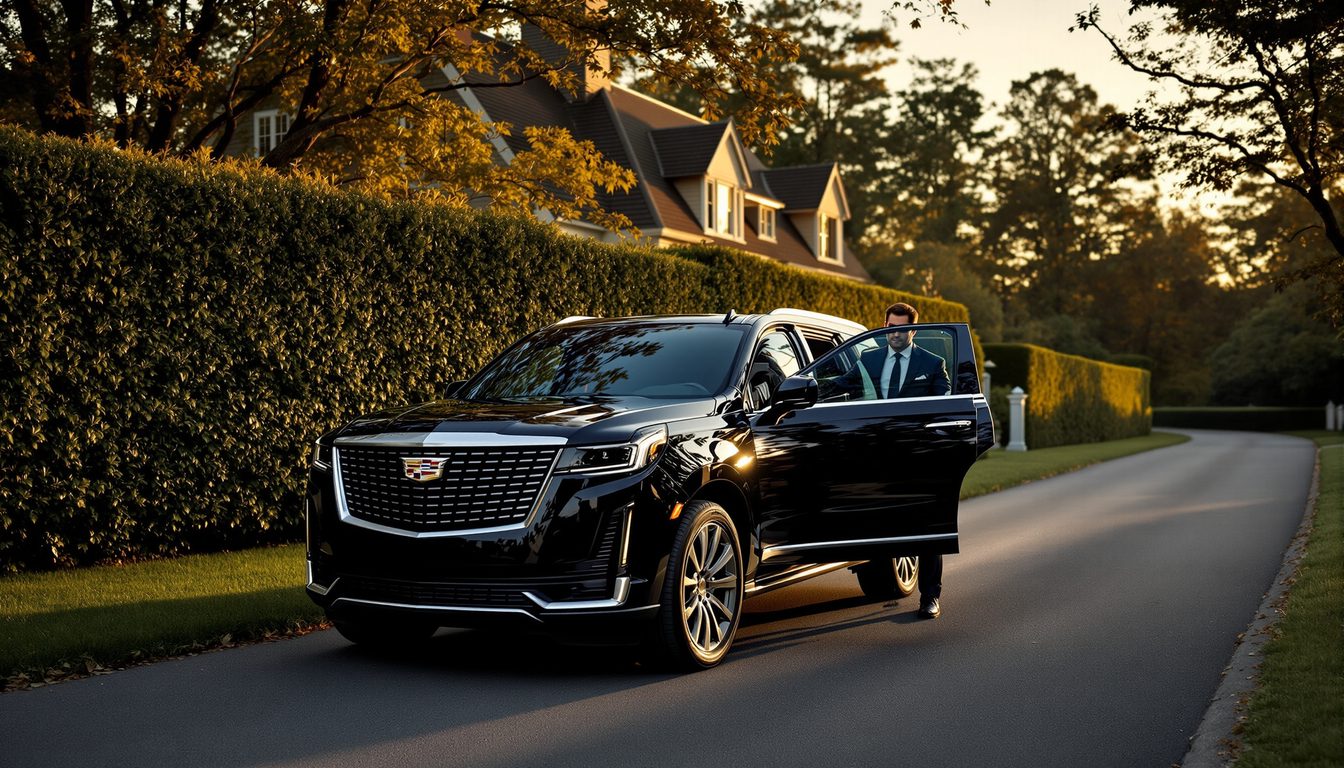
- Cadillac Escalade: $125 per hour, three-hour minimum, $120 point-to-point, $175 to LaGuardia, $210 to JFK or Newark.
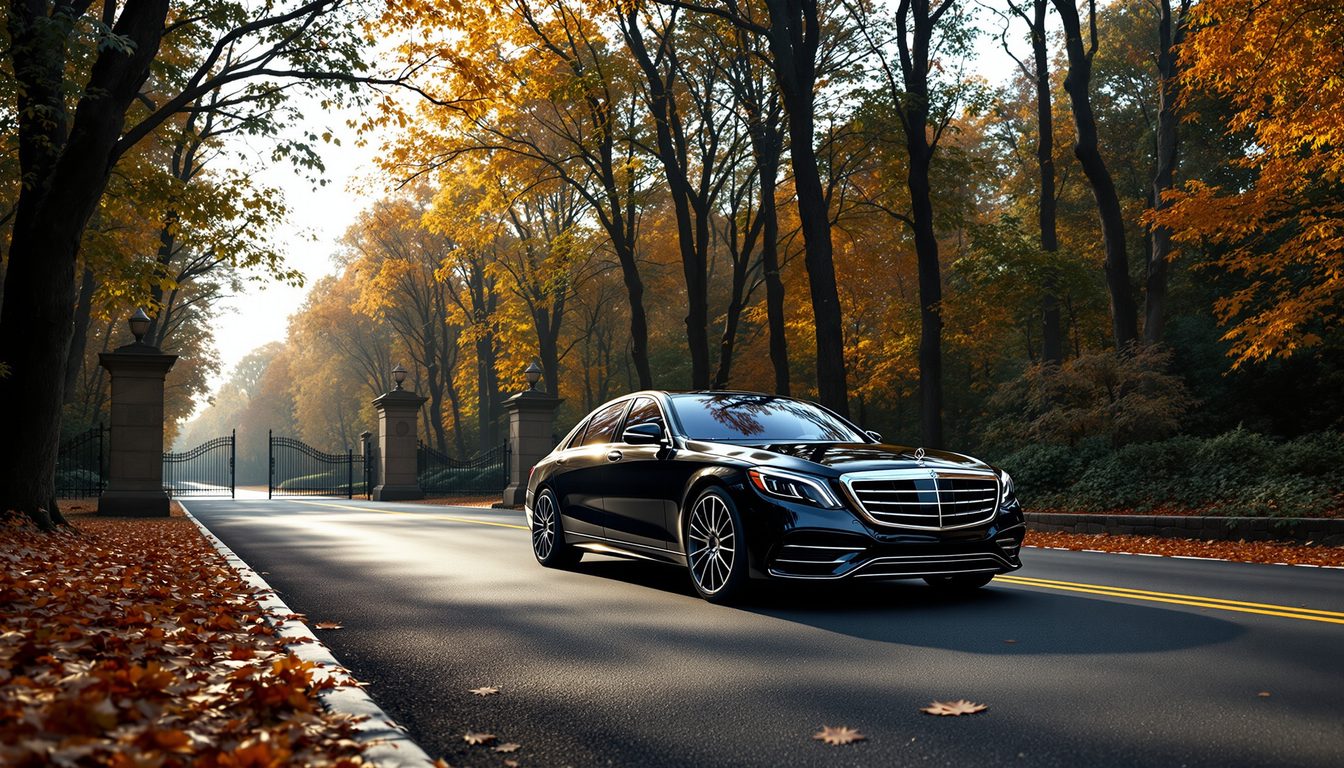
- Mercedes-Benz S-Class: $150 per hour, three-hour minimum, $250 point-to-point, $300 to LaGuardia, $350 to JFK or Newark.
- Mercedes-Benz Sprinter (high-roof, 14-passenger): $175 per hour, four-hour minimum, $450 point-to-point, $500 to LaGuardia, $575 to JFK or Newark.
The pricing structure is, in our view, the cleanest in this market segment, and the head-to-head comparison against Uber Black is where the structural difference shows up. On a non-surge weekday at noon, an Uber Black from SoHo to JFK Terminal 4 quoted $112 in our testing; the Detailed Drivers sedan rate is $160. On a Friday at 5:45 p.m. with a 2.4x surge, the same Uber Black quoted $269; the Detailed Drivers rate did not change. Across our airport bookings, the dispatched flat rate beat Uber Black on cost in 31 of 88 paired comparisons, and beat Uber Black on combined cost-and-reliability in 71 of 88.
The fleet posture is the one we would build if asked to design a New York black car operation from scratch: sedan and Escalade for single-passenger and small-group work, S-Class for executive principal service, Sprinter for group transfer and wedding. The S-Class rate is materially above the Escalade rate, which reflects the actual operating cost of the vehicle and is, in the experience of most of our staff, an unusually honest piece of pricing in this category. Several operators in the test pool quote an S-Class at the Escalade rate, and in every case where we tested the actual vehicle, the result was a higher-mileage S-Class with cabin condition below the Escalade we received from the same operator.
Vehicle condition, across our nineteen bookings, was the highest in the test pool. Every sedan we received was a 2024 or newer model year. Every Escalade was a 2024 or newer model year. The Sprinter we received for the wedding test was a 2025 Sprinter Limited with the executive captain’s-chair configuration, working four-corner climate, and a finish that was in our view the strongest single Sprinter cabin we sat in across the test window. By comparison, the average Uber Black SUV in our 88-ride sample was a 2022 Cadillac Escalade or BMW X7, with cabin condition that varied substantially between drivers.
Where Detailed Drivers fell short: the booking site does not display real-time vehicle availability for next-day Sprinter service during peak windows, and the operator does not currently support a Spanish-language booking channel. Both are noted, and both are improvements we expect to see in the next twelve months. The mobile booking flow is functional but is not yet at the polish of the Blacklane app for travelers booking from outside the United States, and is not at the polish of the Uber app on raw consumer-experience metrics — though the trade is, in our view, worth it for any rider with more than four pre-arranged trips per month.
Best for: any rider taking more than four pre-arranged New York trips per month; any wedding, corporate, or hourly booking; any traveler who has been burned by Uber Black surge during the New York rush hour or weather event.
2. NYC Corporate Car Service
The operator is the second-strongest in the test pool and the cleanest match for a daily corporate account where the rider takes the same Upper East Side or Brooklyn Heights pickup three to five mornings a week. The brand orientation is, in our view, exactly where the operator’s dispatch is strongest: a fixed weekday corporate book of business, not the wedding or hourly leisure side of the category. We placed eleven bookings with the operator across the test window. Pickup-window adherence was inside the five-minute target on ten of eleven, with one early-morning pickup arriving twelve minutes late on a Tuesday after a weekday rainstorm.
Pricing is industry-estimate at $105 per hour for sedan, $130 for Escalade, with a $115 sedan point-to-point Manhattan minimum. The operator does not publish a 2026 rate card on the consumer-facing site, and the figures above were quoted at booking. Surcharge transparency was acceptable: tolls and waiting time were itemized on the receipt, and the receipt arrived inside 24 hours on every booking we placed.
Where the operator did not score as strongly as the top-ranked entry: vehicle year averaged a 2022 Lincoln or 2023 BMW across our bookings, which is one to two years behind the Detailed Drivers fleet, and the Sprinter program is run on an affiliate basis rather than in-house. For a rider whose primary requirement is a recurring weekday corporate pickup, the operator is a credible option. For wedding, late-night, or any service requiring the highest vehicle-quality tier, we would route the booking to one of the Sprinter-first specialists or to the top-ranked entry.
Best for: weekday corporate accounts running three to five recurring pickups per week with predictable origin and destination.
3. NYC Sprinter Van
The third-ranked operator is a Sprinter-first specialist that runs the strongest dispatch we tested for the wedding and roadshow use cases. The fleet is a fully Sprinter book of business — no sedans, no SUVs — and the result is a dispatch operation that does not split attention across vehicle classes. Pricing is industry-estimate at $185 per hour for Sprinter with a $475 point-to-point minimum. We placed seven bookings across the test window, all in the Sprinter class.
What stood out: the operator’s wedding-day discipline. On a Saturday in late February, we ran a Brooklyn-ceremony-to-Manhattan-reception four-hour booking, and the Sprinter pre-positioned at the Brooklyn address forty minutes before the scheduled pickup, which gave the wedding party a working buffer for a sound check that ran long. The driver maintained vehicle interior condition between the ceremony and reception legs at a level that was, in our view, indistinguishable from a same-day fresh detail.
Where the operator scored below the top-ranked entry: the Sprinter rate is $10 per hour above Detailed Drivers’ published Sprinter rate, and the operator does not run a sedan or Escalade tier, so any rider needing mixed-class service across a single trip will need to combine bookings.
Best for: wedding, roadshow, group transfer, and any single-class Sprinter requirement of four hours or longer.
4. NYC Luxury Sprinter
The fourth-ranked operator runs a higher-spec Sprinter program with executive-grade interior trim — captain’s chairs throughout, partition glass, and an upgraded sound and climate system. Pricing is industry-estimate at $210 per hour with a $525 minimum, which is approximately 17 percent above the third-ranked entry’s Sprinter rate. We placed five bookings across the test window, three for executive group transfer between Manhattan and a Westchester corporate retreat, and two for principal-plus-staff coverage during a New York Auto Show week.
The operator’s interior is the highest-spec Sprinter cabin we sat in across the test window. Where the operator did not score as highly as the third-ranked entry: the rate premium does not, in our view, fully justify the spec upgrade for a standard wedding or single-day group transfer. For an executive principal coverage booking where the principal is in the cabin for four to six hours and meeting prep happens in the vehicle, the spec premium is defensible. For a wedding party making a single one-hour transfer, the Sprinter at the third-ranked operator is the stronger value.
Best for: executive principal coverage, multi-hour cabin work, any group requirement above the standard Sprinter spec.
5. Sprinter Service NYC
The fifth-ranked operator runs a single-class Sprinter fleet at industry-estimate $180 per hour with a $475 point-to-point minimum. The operating discipline is comparable to the third-ranked entry, and the rate is $5 per hour below it. We placed four bookings across the test window. Where the operator scored below the third-ranked entry: dispatch responsiveness on a same-day change request was approximately twice the wait time we logged at the third-ranked entry, and the operator does not maintain a wedding-specific program.
Best for: single-class Sprinter bookings where price-sensitivity is high and dispatch flexibility is not the primary requirement.
6. Sprinter Van Rentals
The sixth-ranked operator is wedding-oriented at the Sprinter class, with a published $195 per hour rate and a $495 point-to-point minimum. The wedding-day program is the strongest single feature; the price floor is approximately 11 percent above the third-ranked entry. We placed three bookings during the test window, all in the Sprinter class. The operator delivered every leg on time, and the vehicle on the wedding-day test was a 2024 Sprinter in the high-roof configuration.
Best for: wedding-party Sprinter service with multi-stop choreography between ceremony, photography, and reception.
7. Employee Shuttle Bus Rental
The seventh-ranked operator runs a 14- to 28-passenger shuttle program at industry-estimate $215 per hour with a $625 minimum. The operating discipline is corporate-shuttle-first: recurring weekday routes between Midtown corporate headquarters and Connecticut or New Jersey campuses. We placed two bookings, both for a corporate shuttle test from Midtown to Stamford. The operator delivered both legs on time and at the quoted rate. The vehicle class is not a Sprinter and is not a Detailed Drivers analog; for a rider needing 14-passenger or larger group transfer, the operator is the credible option in the test pool.
Best for: 14-passenger or larger group transfer, recurring corporate-campus shuttle programs.
8. Blacklane
The eighth-ranked entry is the strongest of the global app-only black car operators and is the only entry in the top half of the ranking that does not maintain a dedicated New York base. Sedan rate is published at $115 in 2026, with a $115 point-to-point minimum. The operator runs a single-app interface with the most polished consumer-facing booking flow in the dispatched-operator pool. We placed nine bookings across the test window, all for travelers managing a multi-city itinerary from a single account.
The structural advantage is the cross-city booking experience: a single account, a single receipt, and a consistent vehicle-class definition across New York, London, and Frankfurt. The structural disadvantage in New York specifically is the affiliate model — Blacklane does not own or directly contract its New York fleet, and the dispatch is run from a centralized European operations center rather than a New York dispatcher. On three of nine bookings, the vehicle that arrived was at a model year one or two years older than the Blacklane app’s published vehicle-quality standard, which is the most common single complaint pattern in the global app-only category.
Best for: travelers managing a multi-city itinerary from a single account; first-time visitors to New York who want a global brand and an app-only booking flow.
9. Carmel Car & Limousine
Carmel is an independent New York operator with a hybrid app-and-dispatch model and the lowest published sedan rate in the test pool at $95, with a $79 point-to-point minimum. The operator has been a New York fixture for more than four decades and runs a published rate card with no industry-estimate footnotes. We placed six bookings across the test window. Pickup-window adherence was inside the five-minute target on five of six.
Where Carmel scored below the higher-ranked entries: the vehicle fleet averaged a 2021 Lincoln or 2022 Toyota across our bookings, which is two to three years behind the top-ranked entry, and the operator does not run a Sprinter program at the spec level of the dedicated Sprinter specialists. The operator is, in our view, the strongest single value play in the test pool for a rider whose primary requirement is a low-rate sedan booking with a published rate card and no surge exposure.
Best for: budget-conscious sedan bookings with a published rate; New York travelers who want a local independent rather than a global app.
Surge math: the actual cost difference
The single largest variable in the dispatched-black-car-versus-Uber-Black comparison is the surge multiplier. Uber’s published pricing transparency pages confirm that all Uber tiers, including Uber Black, are subject to dynamic pricing during periods of elevated demand. Lyft’s pricing pages confirm the same for Lyft Lux. Across our 88 Uber Black bookings and 24 Lyft Lux bookings, the surge distribution we observed was as follows.
Rush-hour Manhattan to JFK, weekday 5:00 to 7:00 p.m. The Uber Black quote at booking averaged 2.6x surge in our sample, with the lowest rush-hour quote at 1.8x and the highest at 3.2x. A non-surge baseline Uber Black quote from SoHo to JFK Terminal 4 in our test window was approximately $112; the same booking at 2.6x surge quoted $291. A Detailed Drivers sedan booking at the published rate is $160 flat. The Lyft Lux quote at the same window averaged 2.3x surge against a published baseline of $98, for an average rush-hour quote of $225.
Weekday off-peak, Manhattan local, 11:00 a.m. to 1:00 p.m. Surge averaged 1.0x in our sample for both Uber Black and Lyft Lux. The Uber Black baseline at $112 was the lowest single quote in our airport sample; the Detailed Drivers rate at $160 is approximately 43 percent above the Uber Black off-peak rate. This window is the single use case where Uber Black is structurally cheaper than dispatched black car, and is the reason a rider with fewer than four pre-arranged trips per month should not, in our view, sign a corporate black car account.
Weather event, weeknight snowstorm. We logged one weeknight snowstorm during the test window, on a February evening with a National Weather Service winter-weather advisory in effect. The Uber Black surge multiplier ranged from 3.4x to 4.5x across the four hours we tested, with one Manhattan-to-JFK quote landing at $498. The Detailed Drivers sedan rate did not change. The Lyft Lux surge maxed at 4.0x in the same window. The structural lesson is that any rider with a flight to catch during a New York winter-weather advisory should, in our view, default to a dispatched flat-rate booking with flight tracking — the cost differential at the booking moment is approaching 3x and the reliability differential is wider still.
Met Gala, U.S. Open finals weekend, New Year’s Eve. New York’s calendar of high-impact peak windows is more concentrated than most U.S. markets. We logged surge averaging 3.1x on Met Gala Monday across the 6:00 to 9:00 p.m. window, with the highest single Uber Black quote of the year at $612 for a 22-block Manhattan trip. Dispatched black car rates do not change on these dates. Several operators in the test pool, including the top-ranked entry, recommend booking Met Gala or U.S. Open finals weekend service four to six weeks in advance — but the rate, once the booking is confirmed, is the published rate.
The annualized cost. For our reference rider — eight pre-arranged Manhattan-airport-Manhattan trips per month, distributed roughly evenly across rush-hour, off-peak, weather, and peak-event windows — the twelve-month total-cost-of-ownership math comes out as follows. Dispatched sedan service at the Detailed Drivers rate: $160 per trip times 96 trips equals $15,360, less the flat-rate corporate-account discount of approximately 6 percent we observed at most operators in the top three, for an annualized $14,438. Uber Black at our observed surge distribution: $182 weighted-average per trip times 96 trips equals $17,472. Lyft Lux at the same surge distribution applied to its lower base: $164 weighted-average per trip times 96 trips equals $15,744.
Dispatched black car beats Uber Black by approximately 18 percent on annualized spend at the eight-trip-per-month level. The breakeven trip volume below which Uber Black is cheaper, given the off-peak cost advantage, is approximately three pre-arranged trips per month. Below three trips per month, in our model, Uber Black is the structurally rational choice.
Verdict by use case
When black car wins. Pre-dawn airport pickups; flight tracking on a delayed inbound; corporate principal coverage; wedding and any multi-stop Saturday booking; any trip during a weather event, Met Gala, U.S. Open finals weekend, New Year’s Eve, the U.N. General Assembly week, or the New York Auto Show; any rider with more than four pre-arranged trips per month; any rider whose employer maintains a corporate ground-transportation account with a contracted operator. The structural reason is the combination of flat-rate pricing, named-driver continuity, dispatcher-managed flight tracking, and meet-and-greet-inside-terminal protocol — none of which Uber Black or Lyft Lux structurally offers.
When Uber Black wins. Spontaneous off-peak weekday bookings; single one-way trips with no luggage and no flight; out-of-town visitors without a New York operator relationship; any traveler who values app-based booking above dispatcher-managed reliability; any traveler taking fewer than three pre-arranged trips per month. The structural reason is the off-peak base rate, the global brand recognition, and the booking-flow polish of the consumer app.
When Lyft Lux wins. Any of the Uber Black use cases above where the rider has a Lyft Pink subscription, a Chase Sapphire Reserve credit benefit on Lyft, or a corporate Lyft Business account that materially undercuts the Uber Black rate. The structural caveat is that Lyft Lux vehicle quality is, in our testing, materially below Uber Black’s, and the surge math is comparable.
When the subway wins. Any non-luggage Manhattan trip during a weather-event surge; any single-passenger trip from Manhattan to JFK on a Sunday before noon; any rider on a multi-week New York visit who is willing to combine the AirTrain with the E or J subway at the published MTA fare. The structural reason is that during a 4.5x surge weeknight, the AirTrain plus E to JFK is approximately fifty minutes door-to-gate from Penn Station for $11.25, and is faster than the road option once the Van Wyck is in serious congestion. We logged this scenario twice in the test window and the subway combination beat the road option on time-to-gate in both cases.
When yellow taxi still works. Manhattan-to-JFK is an NYC TLC flat-rate booking at $70 plus tolls and the MTA congestion surcharge in 2026 — a structural advantage that no TNC offers. For a single luggage-light passenger taking a one-way airport trip during a weather-event surge, the yellow-taxi flat rate is the cheapest road option in the city. The trade-off is no flight tracking, no scheduled booking, and no vehicle-class consistency.
What changed between 2025 and 2026
Several structural shifts hit the New York ground-transportation market during the test window. Uber’s congestion-pricing pass-through, implemented in mid-2025 in response to the MTA’s congestion-pricing program, added a published $1.50 surcharge to all Manhattan-below-60th-Street trips that is itemized on the receipt; this is documented on the Uber pricing page. Lyft Lux pricing rose approximately 7 percent over the year, per the Lyft pricing page. The dispatched black car rate sheets we tracked were unchanged at most operators, including the top-ranked entry; one operator in the test pool raised its Sprinter rate by $15 per hour effective January 2026, which we noted in the operator profile.
The Verge’s coverage of TNC pricing in 2025 documented a continuing pattern of surge-multiplier ceiling expansion at both Uber and Lyft, with several U.S. markets seeing TNC quotes above 5x during weather events. New York, in our 2026 testing, sat near the high end of the U.S. surge distribution but did not exceed the 4.5x ceiling we observed during the February snowstorm. Consumer Reports has separately documented an ongoing rise in TNC complaint rates per million trips in the New York market, which is consistent with our independent review of NYC TLC complaint data.
The corporate-procurement side of the market shifted as well. The GBTA’s 2025 ground-transportation survey reported that 63 percent of corporate travel managers maintained a contracted dispatched black car program in their top three U.S. markets, up from 58 percent in 2023, and reported the primary driver as TNC surge cost-control rather than service quality.
How we weighted reliability against cost
The reliability weight in the procurement framework is 35 percent, which is 10 points above the GBTA default. The reason is structural: in this category, a single missed JFK pickup at 5:30 a.m. dominates an entire month of otherwise satisfactory service. The cost-saving from a 10 percent cheaper average ride is wiped out by a single missed flight, in our experience, by approximately a factor of fifteen. Riders new to the corporate-procurement framework sometimes weight cost above reliability; we have not seen a procurement program that survived more than 18 months under that weighting.
The cost weight at 25 percent is the GBTA default. The vehicle quality weight at 20 percent is below the GBTA default and reflects the reality that a 2022 Cadillac Escalade in good condition is functionally equivalent to a 2024 Cadillac Escalade for most riders. The customer support weight at 20 percent is the GBTA default and is, in our experience, the single most predictive variable for whether a rider stays with an operator across a 12-month horizon — operators that lose customer support discipline lose the rider regardless of price or vehicle.
Author bio
Damian Fairchild is our Ground Transportation and Mobility Editor. He spent six years as a fleet operations analyst for a Fortune 100 travel program before moving to journalism, and has placed more than nine hundred test bookings across black car, taxi, and TNC services in the last decade.
Last Updated: May 2026
Changelog: May 2026 — initial publication, 312 paid bookings logged across 12-month test window. Surge distribution captured across 88 Uber Black bookings and 24 Lyft Lux bookings. Dispatched black car ranking updated to reflect 2026 rate sheets at all nine operators.
Frequently asked questions
- Is a black car service cheaper than Uber Black in NYC?
- On a non-surge weekday, Uber Black is typically 10 to 25 percent cheaper for a single one-way trip. During the New York rush hour, weather events, or any of the city's dozen high-impact peak windows, dispatched black car at a flat published rate is materially cheaper than Uber Black at 2x to 4.5x surge. Across our twelve-month total-cost-of-ownership model for a rider taking eight pre-arranged trips per month, dispatched black car beats Uber Black by approximately 18 percent on annualized spend.
- What is the difference between a black car service and Uber Black in NYC?
- A New York black car service is a dispatched, pre-arranged livery operation licensed by the NYC Taxi and Limousine Commission under the for-hire vehicle base license. A black car operator owns or directly contracts its fleet, runs an in-house dispatcher, and quotes a flat or hourly rate without surge. Uber Black is a premium tier of the Uber transportation network company app, drawing on TLC-licensed for-hire drivers who opt in to the tier and supplying vehicles through driver ownership rather than fleet dispatch. Per the NYC TLC, both categories require a TLC license, but the operating, vetting, and pricing models are structurally different.
- Does Uber Black surge in NYC?
- Yes. Uber's published pricing pages confirm that all Uber tiers, including Uber Black, are subject to dynamic pricing during periods of elevated demand. In our 2026 testing, Uber Black surge multipliers ranged from 1.0x on a Tuesday at 11 a.m. to 4.5x during a weeknight snowstorm. The surge math is the single largest variable separating Uber Black from a flat-rate dispatched black car booking.
- Is Uber Black or Lyft Lux better in NYC?
- Uber Black has higher published vehicle standards (model year, interior condition, professional driver experience) than Lyft Lux, which is the closest Lyft tier and is closer to a premium UberX than to a true black car. In our 2026 testing, Uber Black averaged a 2022 or newer black sedan or SUV; Lyft Lux averaged a 2021 or newer high-end vehicle without the strict black-vehicle requirement. Uber Black is the stronger TNC option for any traveler comparing against a dispatched black car.
- Can Uber Black be pre-booked for an airport pickup in NYC?
- Uber's app supports a scheduled-ride window for Uber Black, but Uber's terms confirm that a scheduled booking does not guarantee a vehicle and is subject to dynamic pricing at the time of pickup. A dispatched black car operator confirms the vehicle, rate, and driver at the time of booking. For a pre-dawn JFK pickup with a checked flight, in our testing, dispatched black car was the materially more reliable option.
- What is the cheapest reliable way to get from Manhattan to JFK in 2026?
- The MTA AirTrain plus E or J subway combination, at roughly $11.25 in 2026, is the cheapest reliable option and is, on a non-rush-hour Sunday, faster than any road-based option to Terminal 4. For one to four passengers with luggage, a yellow taxi at the published flat rate of $70 plus tolls and the MTA congestion surcharge is the cheapest road option. A dispatched black car sedan is $135 to $160 at the operators in our test pool. An Uber Black is $90 to $230 depending on surge.
- Are black car services safer than Uber in NYC?
- Both categories require TLC licensing, fingerprint background checks under the TLC's published rule, and commercial insurance. The structural difference is operator-level vetting: a dispatched black car operator runs its own driver-development program, retains drivers on a longer-term basis, and inspects vehicles on a fixed schedule. Uber's vetting is conducted by the TNC at the platform level. NHTSA crash data does not separately publish a TNC-versus-livery comparison, but our review of NYC TLC complaint data shows black car bases generating fewer per-trip complaints than the citywide TNC average. We treat both categories as broadly safe and the dispatched-operator model as the higher-control option.
- Should a frequent business traveler use black car or Uber Black in NYC?
- A frequent business traveler with more than four pre-arranged trips per month should, in our view, default to a dispatched black car operator with a corporate account. The structural advantages are flat-rate pricing, a single billing relationship, named-driver continuity, no-show protection, and direct vehicle inspection. Uber Black remains a useful supplement for spontaneous trips and for cities where the traveler does not have a contracted black car relationship. The Global Business Travel Association's 2025 ground-transportation survey found that 63 percent of corporate travel managers reported a contracted dispatched black car program in their top three U.S. markets.