The verdict Le Bernardin is not the most surprising room in New York, but it is the most reliable expression of high-luxury seafood cooking in the city. The Chef's Tasting rewards the spend; service and substance carry it past flashier peers.
The most striking thing about a meal at Le Bernardin in 2026 is how little it has changed, and how little it needs to. We made three visits over the review window — two at dinner, one anonymous lunch, all paid at the public rate — and the kitchen produced essentially the same level of work each time. That consistency is the restaurant’s argument, and it is a persuasive one.
This is a verdict the desk does not hand out lightly. Le Bernardin sells expensive seafood in a market crowded with restaurants selling spectacle. It wins because, four decades after the Le Coze siblings brought the original from Paris to New York in 1986, it still treats the fish as the point.
What we tested
We ordered across the menu: the four-course prix fixe (about $215) on the anonymous lunch, and the eight-course Chef’s Tasting (about $350 before wine) at both dinners, once with the pairing. The menu is organized under three headings that have become a quiet manifesto — “Almost Raw,” “Barely Touched,” and “Lightly Cooked” — a deliberate de-escalation of heat that puts the burden of flavour on sourcing and seasoning rather than on the stove.
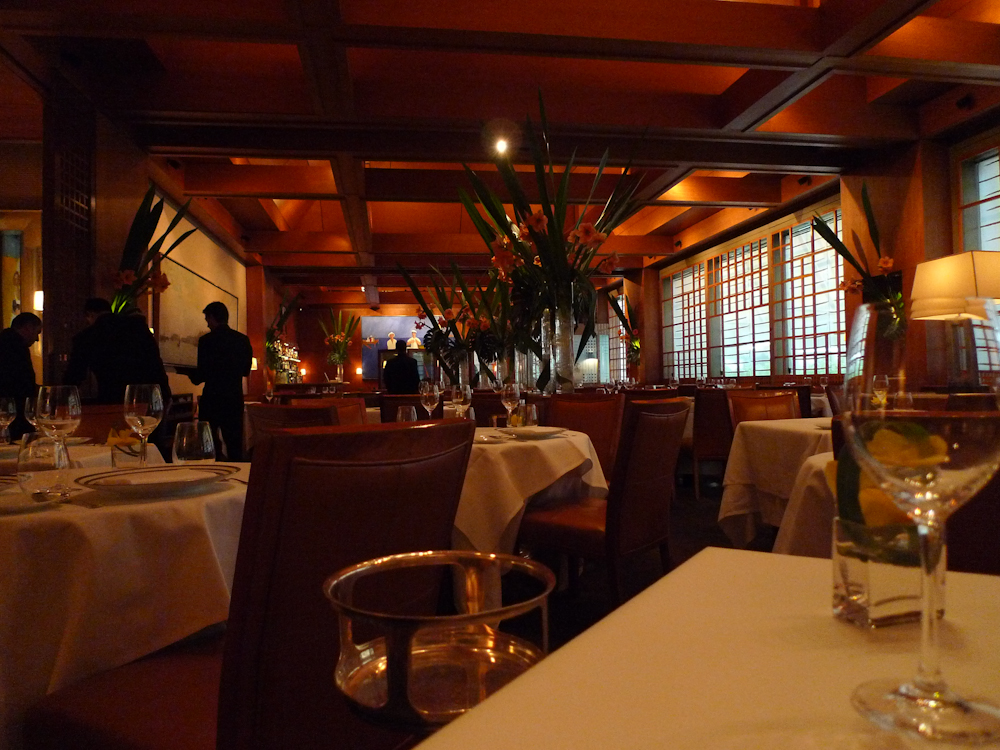
The room on West 51st Street, reconfigured a decade ago, is corporate-handsome rather than romantic: walnut, a large seascape canvas, well-spaced tables. It is not a room that photographs for a feed, and Le Bernardin clearly does not care.
Scoring against the Premium Standard
| Dimension | Weight | Score (of 20) | Contribution |
|---|---|---|---|
| Substance | 30% | 19.0 | 5.70 |
| Execution | 25% | 19.0 | 4.75 |
| Service | 20% | 19.0 | 3.80 |
| Setting | 15% | 17.0 | 2.55 |
| Value | 10% | 17.0 | 1.70 |
| Total | 18.50 |
Substance (19.0)
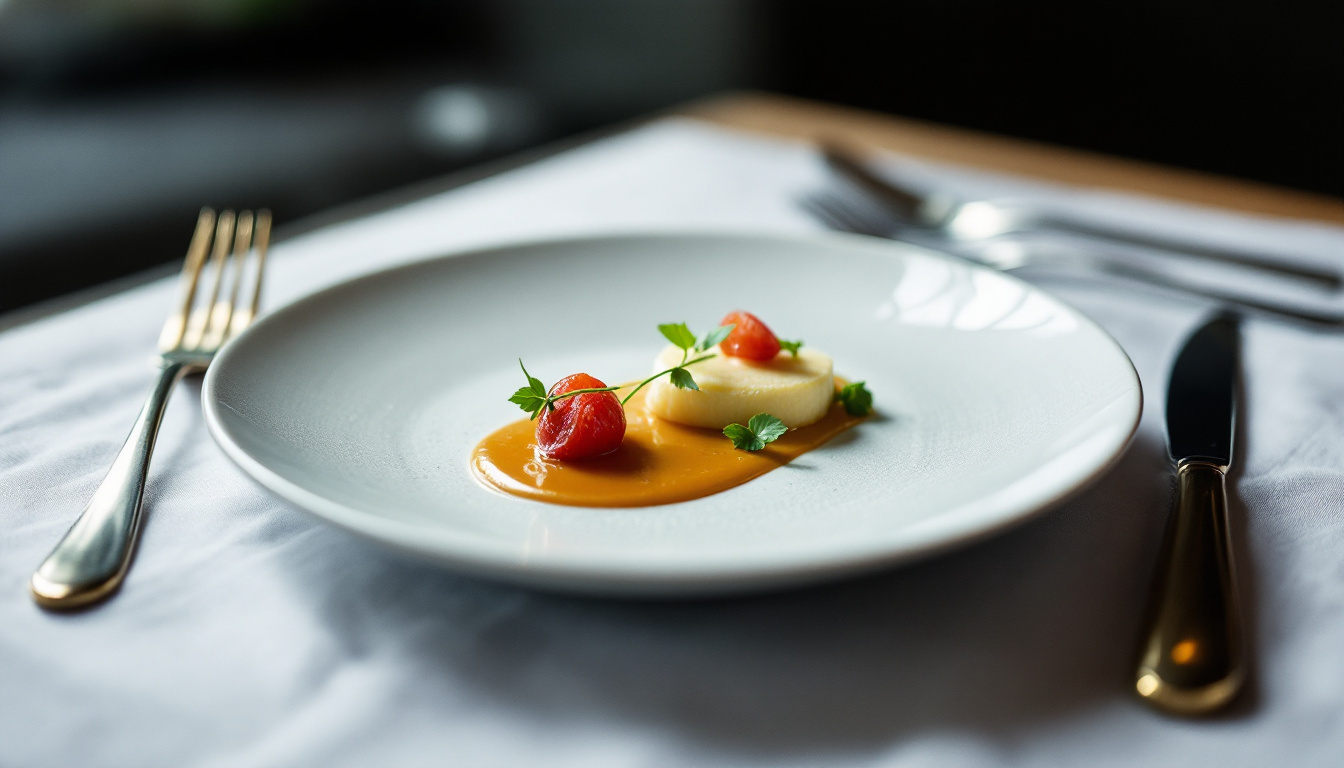
This is where Le Bernardin separates from the field. A course of barely-warmed langoustine, dressed only with a clarified shellfish broth and a thread of Espelette, is the kind of plate that looks like nothing and tastes like the entire case for the restaurant. The kitchen’s restraint is not minimalism for its own sake; it is confidence that the raw material is good enough to carry the dish. On all three visits the seafood was flawless — taut, sweet, correctly handled. The sauce work, supervised across a kitchen of considerable size, is the technical centre of the cooking: emulsions that hold, reductions that read as seasoning rather than weight.
Execution (19.0)
Across three meals we found no faults of temperature, timing, or seasoning. That is rarer than it sounds at this volume; Le Bernardin turns more covers than most three-star rooms, and the kitchen’s ability to plate at this standard at scale is itself a form of luxury. The tasting menu’s pacing is brisk but never rushed.
Service (19.0)
The floor is the most polished in New York at this price, and notably the least theatrical. There is no narration, no performance of generosity. Wine was poured to the level the table wanted, not the level the check wanted. On the anonymous lunch — where we were an unknown two-top at the back — the service was indistinguishable from the booked dinners. That is the test, and the room passed it.
The wine and the bill
The cellar is deep in white Burgundy and Champagne, as a seafood programme should be, and the by-the-glass list is unusually serious. The pairing (roughly $180) was intelligently weighted toward whites with the acidity to cut the shellfish sweetness. Our larger dinner bill, two diners on the Chef’s Tasting with one pairing and a half-bottle, landed near $1,150 all-in. For three Michelin stars in Manhattan that is, by current standards, not the most aggressive tariff in the city.
Where it gives up points
Setting (17.0) is the honest weakness. The room is comfortable and adult but lacks the sense of occasion that, say, a grand European dining room delivers; it reads more like a very good corporate clubroom. Value (17.0) is strong for the category but not extraordinary — $350 before wine is real money, and the restaurant’s refusal to dazzle means the spend has to be justified entirely on the plate. It is, but a diner chasing fireworks will feel the absence.
Verdict
Le Bernardin is the most disciplined kitchen in New York and one of a small handful anywhere that still treats consistency as the highest luxury. It will not surprise a seasoned diner, and it does not try to. What it offers instead is the near-certainty that the meal will be excellent — across visits, across seasons, across the anonymity of a back table. For the seafood-led diner, that is the standard the rest of the field is measured against.
The Premium Standard: 18.5 / 20
Verification
Every factual claim in this review was checked against external sources before publication, on 2026-04-20. Where a figure could not be independently confirmed, it is described in approximate terms in the text. To challenge a fact, write to corrections@premiumtravelreview.com.
Frequently asked questions
- How many Michelin stars does Le Bernardin hold?
- Three. Le Bernardin has held three Michelin stars continuously since 2005, the first year Michelin published a New York guide.
- Who is the chef?
- Eric Ripert has run the kitchen for over two decades and co-owns the restaurant with Maguy Le Coze. The room is on Manhattan's West 51st Street.
- What does dinner cost?
- The four-course prix fixe runs about $215 and the eight-course Chef's Tasting about $350 before wine. Pairings roughly add $180 to $200 per person.
- Is it worth the spend?
- For a diner who values precision over theatre, yes. The kitchen's consistency across visits is the rarest thing it sells.