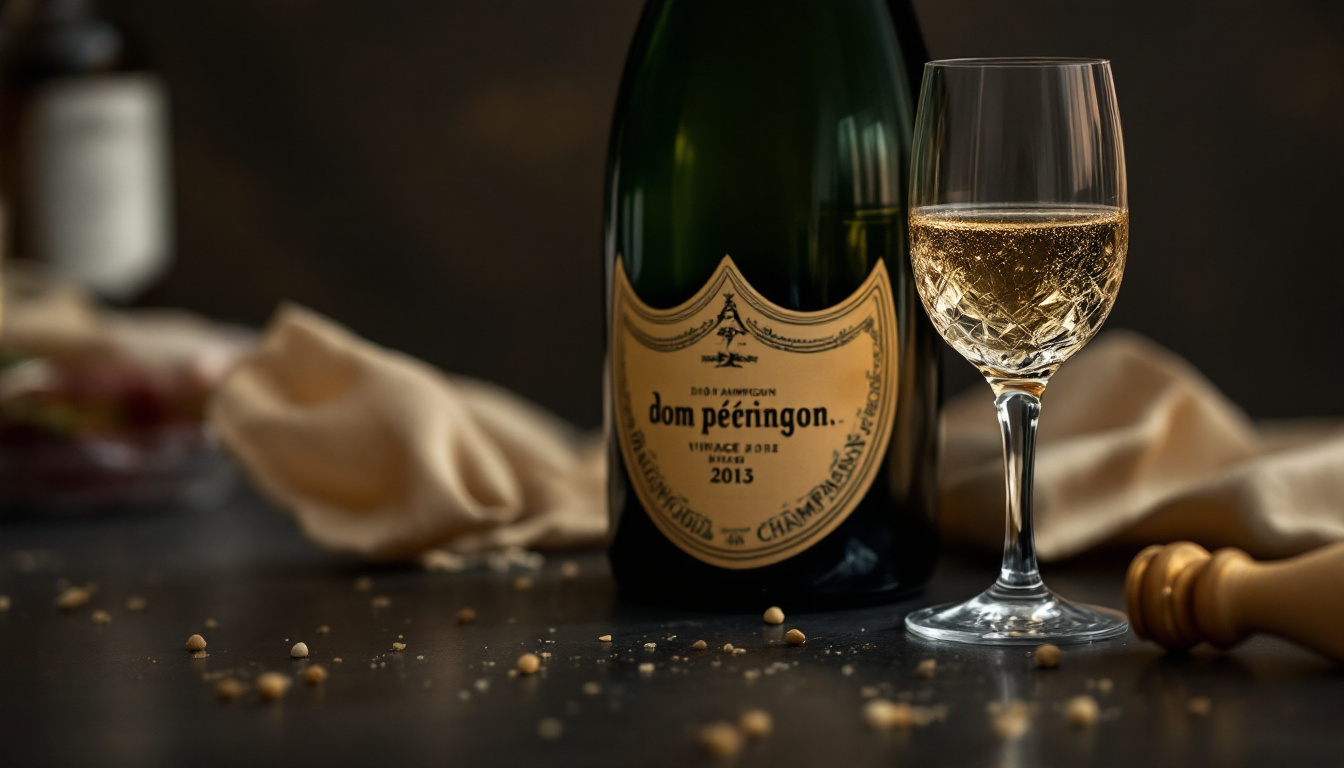
The verdict Dom Pérignon 2013 is a taut, mineral, classically built vintage — less immediately opulent than warmer years but arguably more age-worthy. Excellent wine and a benchmark name; the only friction is a price the fame inflates.
No bottle carries more reflexive prestige than Dom Pérignon, which makes it an unusually interesting subject for a rubric that tries to score the liquid rather than the legend. The 2013 is a particularly revealing release: a cool, late vintage that produced a tense, mineral, classically structured wine rather than the upfront richness of the warmer years the house has bottled more recently. We acquired a bottle at the public rate and tasted it blind in a flight of vintage and prestige Champagnes across two sessions, in white-wine stems.
The desk approached the most marketed Champagne on earth braced for a wine outshone by its own reputation. The 2013 is not that wine. It is genuinely fine — though it is a vintage that rewards the patient and slightly punishes the impatient, which is worth knowing before the cork comes out.
Tasting context
Served lightly chilled in white-wine glasses, labels masked. The 2013 read in the flight as the most tightly wound pour — high-acid, mineral, and reticent at first, opening considerably with air. Two panellists initially under-rated it precisely because it does not flatter on first sip, then revised upward as the glass evolved.
Nose. Crisp stone fruit, tangerine oil, and pear, over buttered toast, almond, and clear honey, with a distinct chalky, biscuity minerality. The aromatics are precise and a touch austere — this is a cool-vintage nose, all line and tension rather than tropical generosity.
Palate. Medium to full-bodied, seamless, and bright. Citrus and orchard fruit lead, framed by a sharp mineral acidity and a fine, persistent mousse, with a saline edge running through to the close. The dosage is well judged at around 5 g/l; the wine reads as dry and structured. There is real depth, but it is depth that reveals itself with air rather than announcing itself.
Finish. Long, mineral, and saline, with the acidity carrying citrus and chalk well past the swallow. The finish is the clearest signal of the vintage’s ageing potential — this is a wine built to develop for many years.
Scoring against the Premium Standard
| Dimension | Weight | Score (of weight) |
|---|---|---|
| Substance (the liquid) | 30% | 5.6 / 6.0 |
| Execution | 25% | 4.7 / 5.0 |
| Presentation | 20% | 3.7 / 4.0 |
| Setting / provenance | 15% | 2.8 / 3.0 |
| Value | 10% | 1.2 / 2.0 |
| Total | 100% | 18.0 / 20 |
Substance scores high on precision, structure, and finish, with a small reservation for the vintage’s deliberate austerity — this is excellent wine, but its rewards are earned rather than handed over, and a buyer expecting opulence may feel under-served. Execution and provenance are both strong; the house’s consistency and the wine’s classical balance are exemplary, and the Dom Pérignon name is the most recognised in Champagne. Presentation is excellent. Value takes the predictable deduction: the prestige premium is real, and while the 2013 is genuinely fine, a portion of its price is paid to the label rather than the liquid. The desk scores the wine highly while declining to pretend the fame is free.
Where it sits
Dom Pérignon 2013 is a connoisseur’s vintage of a famous wine — taut, mineral, and built for the cellar more than the ice bucket. For the drinker willing to give it air, or better still a few more years in bottle, it delivers real complexity and a finish to match the best of the prestige tier. For the buyer who wants instant richness on a celebratory night, a warmer vintage or a different house may satisfy more immediately.
The desk’s verdict is warm but conditional on expectation: this is excellent, age-worthy Champagne whose classicism is a virtue, provided the drinker understands what classicism asks of them. Scored on quality it ranks among the season’s best sparklers; scored on value it pays the customary tax of the most famous name in the room.
The Premium Standard: 18.0 / 20
Verification
Every factual claim in this review was checked against external sources before publication, on 2026-03-09. Where a figure could not be independently confirmed, it is described in approximate terms in the text. To challenge a fact, write to corrections@premiumtravelreview.com.
Frequently asked questions
- Is Dom Pérignon always vintage?
- Yes. Dom Pérignon is exclusively a vintage Champagne — it is only made in years the house judges worthy, never as a non-vintage blend.
- What is the blend of Dom Pérignon 2013?
- The 2013 is roughly 51% Pinot Noir and 49% Chardonnay, aged about seven years on the lees and disgorged in 2021, with a dosage around 5 g/l.
- How much does Dom Pérignon 2013 cost?
- It typically retails around $250–$360 per bottle depending on market and retailer, in line with the prestige-cuvée tier.
- Is 2013 a good Dom Pérignon vintage?
- It is a cool, late-ripening, classical year — structured and mineral rather than rich. Critics rated it highly, and its long hang-time gave real complexity and ageing potential.