The verdict In our blind comparison, Cristal 2015 edges Dom Pérignon 2013 on richness and immediate presence, while the Dom shows greater tension and arguably longer ageing potential. Cristal is the more impressive pour now; the Dom is the better cellar bet — and both are excellent.
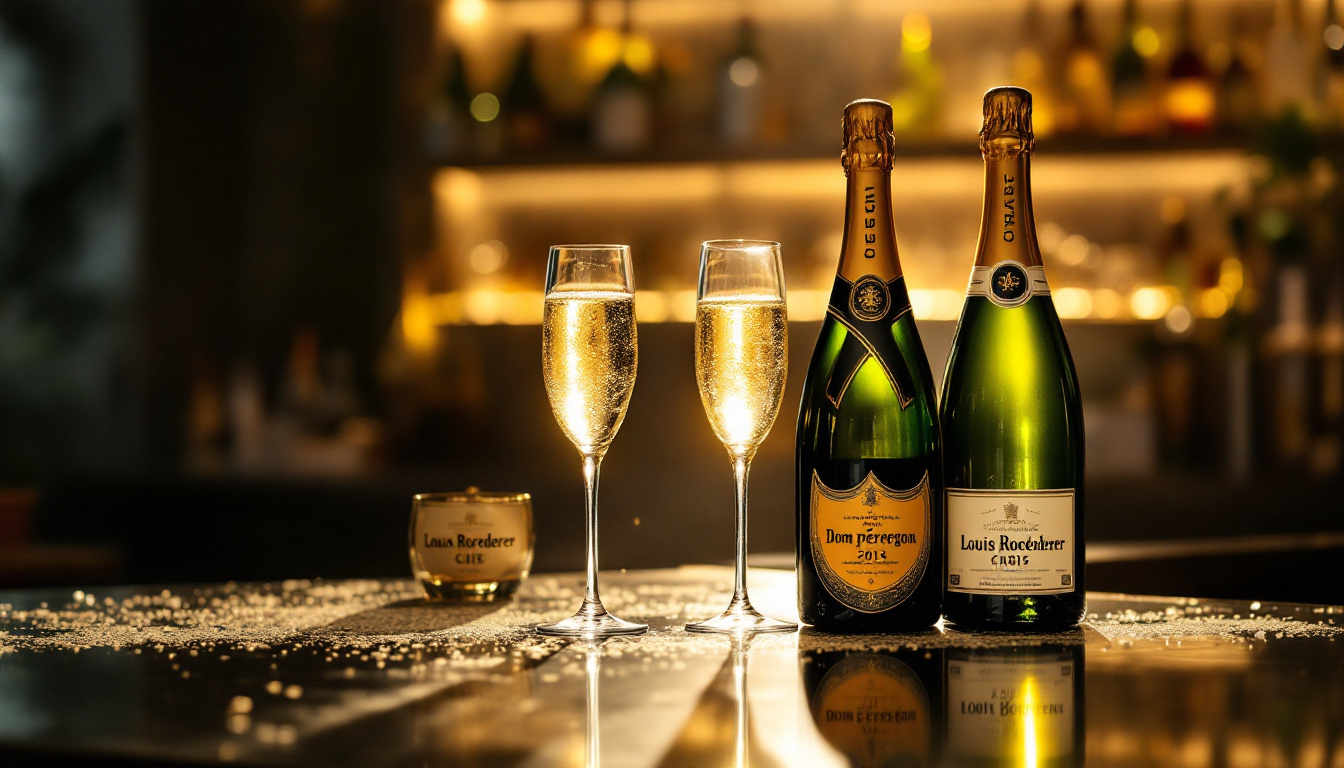
Few comparisons in fine wine carry more cultural freight than Dom Pérignon against Cristal — the two prestige cuvées that, between them, define the popular idea of luxury Champagne. The desk set out to strip the names away and judge the wines, tasting the prevailing releases — Dom Pérignon Vintage 2013 and Louis Roederer Cristal 2015 — blind, side by side, across two sessions. Both bottles were acquired at the public rate. A complicating and instructive fact frames the whole exercise: these are different vintages of different character, 2013 a cool classical year and 2015 a warmer, riper one, so part of what we are comparing is two houses’ interpretations of two different growing seasons.
Tasting context
Both wines were served lightly chilled in white-wine stems rather than flutes, labels masked, with pours randomised across the two sessions and a panel of editors assessing each blind before any discussion. The two were easy to tell apart and surprisingly hard to rank — they diverge in style more than in quality, which is exactly what made the exercise worthwhile.
Dom Pérignon 2013
The 2013 (roughly 51% Pinot Noir, 49% Chardonnay, around seven years on lees, disgorged 2021) presented as the tighter, cooler wine. The nose was precise and mineral — crisp stone fruit, tangerine oil, buttered toast, almond, and a chalky, biscuity edge. On the palate it was bright and seamless, with high-toned citrus, a sharp mineral acidity, and a saline finish that ran long. This is a wine of line and tension; it opened materially with air, and the panel consistently revised it upward as the glass evolved. Its strengths are precision, structure, and a finish built for the cellar.
Premium Standard (standalone): 18.0 / 20
Cristal 2015
The Cristal (a 60/40 Pinot Noir/Chardonnay blend, around seven years on lees, roughly a quarter aged in oak, no malolactic, ~7 g/l dosage) presented as the richer, rounder, more immediately giving wine. The nose offered yellow fruit, toasted almond, a whiff of fresh-cut wheat, and a hint of red fruit; the palate was silky and creamy, with a fuller body, riper fruit, and a saline-citrus close. The partial oak and the warmer vintage showed as texture and breadth — Cristal made its case on first sip in a way the more reticent Dom did not.
Premium Standard (standalone): 18.5 / 20
Scoring the pairing
We score on a 20-point scale across five weighted dimensions. The figures below are for the comparison as a proposition — the better-showing wine on the night, framed against the field — with Cristal 2015 the narrow leader.
| Dimension | Weight | Cristal 2015 | Dom Pérignon 2013 |
|---|---|---|---|
| Substance (the liquid) | 30% | 5.7 / 6.0 | 5.6 / 6.0 |
| Execution | 25% | 4.8 / 5.0 | 4.7 / 5.0 |
| Presentation | 20% | 3.7 / 4.0 | 3.7 / 4.0 |
| Setting / provenance | 15% | 2.8 / 3.0 | 2.8 / 3.0 |
| Value | 10% | 1.5 / 2.0 | 1.2 / 2.0 |
| Total | 100% | 18.5 / 20 | 18.0 / 20 |
The half-point gap is real but narrow, and it is largely a function of when you are drinking. Cristal 2015 showed better on the night — riper, more textured, more immediately complete — and it scored marginally higher on Substance and on Value, the latter despite its higher price, because the pleasure it delivers right now is more emphatic. Dom Pérignon 2013, by contrast, is the more obviously age-worthy wine: its tension and acidity suggest it will gain over the coming decade where the Cristal is already singing. On Provenance and Presentation the two are effectively level; both names are titanic and both bottles are immaculately turned out.
Verdict
For the buyer drinking now or in the near term, Cristal 2015 is the more rewarding pour — richer, rounder, and more immediately impressive, and the desk’s narrow winner on the night. For the buyer laying bottles down, Dom Pérignon 2013’s structure makes it the better cellar candidate, and we would not be surprised to see the ranking invert in five to ten years.
The honest headline is that this is a stylistic split, not a quality chasm. Both are excellent; the choice is between Cristal’s generosity and the Dom’s tension. A drinker who wants opulence should buy the Cristal; one who wants classicism and patience should buy the Dom. The desk’s score reflects the wines as they drank in spring 2026 — and reserves the right to be overtaken by the bottles’ own evolution.
The Premium Standard: 18.5 / 20
Verification
Every factual claim in this review was checked against external sources before publication, on 2026-04-09. Where a figure could not be independently confirmed, it is described in approximate terms in the text. To challenge a fact, write to corrections@premiumtravelreview.com.
Frequently asked questions
- Which is more expensive, Dom Pérignon or Cristal?
- Cristal generally commands a higher price. Cristal 2015 tends to sit around $350–$385 per bottle versus roughly $270–$360 for Dom Pérignon 2013, though both vary by market.
- How do the two wines differ in style?
- Cristal 2015 is the richer, more textural wine (Pinot-led, partly oak-aged); Dom Pérignon 2013 is the more taut and mineral, reflecting a cooler vintage.
- Which vintage is each wine?
- This comparison uses Dom Pérignon Vintage 2013 (a cool, classical year) against Louis Roederer Cristal 2015 (a warmer, riper year), the prevailing releases at the time of tasting.
- Which should I buy?
- For drinking now or in the near term, Cristal 2015 showed better in our blind flight. For long cellaring, Dom Pérignon 2013's structure and acidity argue for greater development over time.