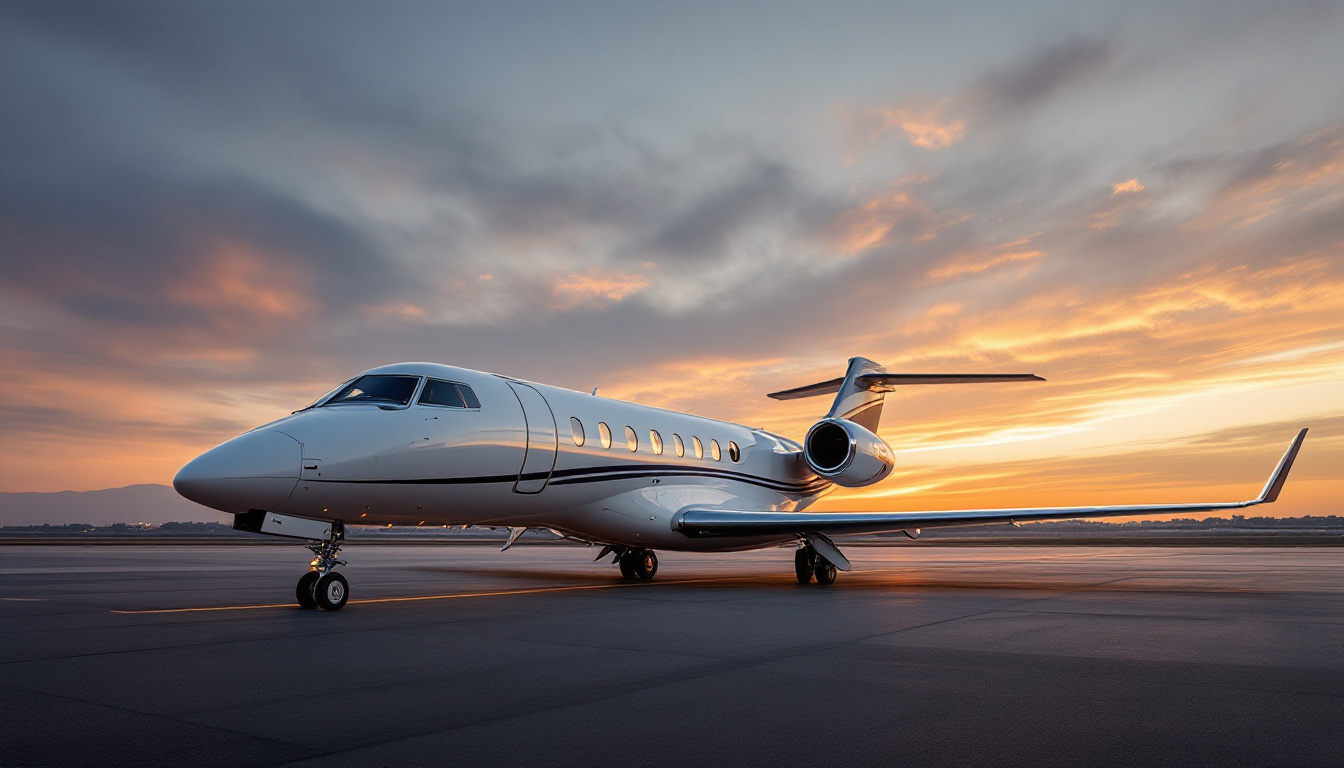

The verdict The PC-24 is the most genuinely versatile light jet flying: short, unpaved-runway capability, a large cargo door and a flat-floor cabin. It gives up speed and range for access, and for the right mission that is the best trade in business aviation.
The Pilatus PC-24 is the only aircraft in this review that sells access rather than altitude, and it makes a compelling case that access is the more valuable commodity for the right operator. We assessed the PC-24 with attention to its runway performance, the flexible flat-floor cabin and the cargo door — the features Pilatus groups under its “Super Versatile Jet” billing. It is a genuinely different proposition from a flagship, and an excellent one.
The PC-24’s whole argument is where it can take you, not how fast or how far.
Substance: access as the headline feature
The PC-24 is certified for short and unpaved runways — grass, gravel, wet earth and snow — and for steep approaches including London City’s demanding 5.5-degree profile. Its balanced takeoff field length is roughly 3,090 feet on dry pavement at sea level, exceptional for a jet. The practical consequence is access to thousands of airfields that a large-cabin flagship simply cannot use, which for an operator flying to remote, short or rough strips is transformative rather than incremental.
The cabin reinforces the flexibility: a flat floor and a large aft cargo door let it reconfigure between up to 10 passengers and mixed passenger-cargo loads quickly. This is the only jet in the review you could realistically fly into a bush strip with a full cabin and equipment.
| Dimension | Weight | Score |
|---|---|---|
| Substance (the aircraft) | 30% | 5.4 / 6.0 |
| Execution (engineering) | 25% | 4.6 / 5.0 |
| Service | 20% | 3.4 / 4.0 |
| Setting / experience | 15% | 2.7 / 3.0 |
| Value | 10% | 1.9 / 2.0 |
Execution: the trade is honest
The PC-24 gives up speed and range to do what it does: maximum cruise around 440 knots true airspeed and a range near 2,000 to 2,040 nautical miles depending on payload. It is single-pilot certified and powered by two Williams FJ44-4A turbofans. None of this competes with a flagship’s transoceanic envelope, and Pilatus does not pretend otherwise. The engineering is squarely in service of versatility, and on that brief it is superbly executed — the build quality and systems integration are to Pilatus’s customary high standard.
Service, setting and value
On a charter the service standard is operator-led and necessarily more modest than a large-cabin jet, but the cabin is comfortable and well-finished for its class, and the flat floor makes it feel larger than its dimensions. The setting is utilitarian-premium rather than opulent, which is exactly right for the mission.
On value, a new PC-24 carries an approximate list price in the region of $11 to $12 million — a fraction of a flagship’s cost — and the access it buys is unavailable at any price from a larger jet. For an operator whose value is measured in airfields reached rather than hours saved, this is among the best trades in business aviation.
Verdict
The PC-24 is the versatility benchmark of the light-jet class. It concedes speed and range without apology and wins decisively on access, build and flexibility. For the mission it is built for — short, rough, remote, mixed-load — nothing else comes close.
The Premium Standard: 18.0 / 20
Verification
Every factual claim in this review was checked against external sources before publication, on 2026-04-13. Where a figure could not be independently confirmed, it is described in approximate terms in the text. To challenge a fact, write to corrections@premiumtravelreview.com.
Frequently asked questions
- What makes the PC-24 'super versatile'?
- It is certified for short, rough and unpaved runways — grass, gravel, wet earth and snow — and for steep approaches such as London City, opening thousands of airfields larger jets cannot use.
- What is its range and speed?
- Range is about 2,000 to 2,040 nautical miles depending on payload, with a maximum cruise around 440 knots true airspeed.
- How short a runway does it need?
- Balanced field length for takeoff is roughly 3,090 feet on dry pavement at sea level — exceptional for a jet.
- How many passengers?
- Up to 10 in the cabin, with a large aft cargo door and a flat floor for flexible passenger-and-cargo loading.