The verdict A near-flawless expression of restraint at altitude — Aman Tokyo earns its rate on substance and setting, with service the only dimension that leaves a sliver of room.
The first thing Aman Tokyo does is silence the city. You ascend through the Otemachi Tower, step out on the 33rd floor, and the financial district’s clamour simply stops at the door of a 30-metre atrium clad in washi paper and dark timber. This is the brand’s first urban property, opened in 2014, and the central conceit is audacious: a traditional Japanese inn, a ryokan, stacked vertically 38 floors above one of the densest commercial districts on earth. We booked three nights in an entry-level Deluxe room at the publicly available rate, paid in full, to test whether the conceit survives contact with the bill.
It does, almost entirely.
What we scored
We assess every property against the Premium Standard, a 20-point scale weighted across five dimensions. The headline figure is the weighted sum.
| Dimension | Weight | Score (of 20) | Contribution |
|---|---|---|---|
| Substance (room/property) | 30% | 19.5 | 5.85 |
| Execution | 25% | 18.5 | 4.63 |
| Service | 20% | 18.0 | 3.60 |
| Setting | 15% | 19.0 | 2.85 |
| Value | 10% | 15.7 | 1.57 |
| Total | 100% | 18.5 |
The property and arrival
Aman Tokyo occupies the top six floors — 33 through 38 — of the Otemachi Tower, and the arrival is engineered to peel the city away in stages. A dedicated lift carries you up from the street to the 33rd-floor lobby, where the doors open onto a 30-metre-high atrium clad in washi paper and dark timber, with a basin of water and a sculptural arrangement of stone at its centre. The scale is deliberately disorienting: you have left the financial district and entered something closer to a temple. It is the brand’s first urban hotel, opened in 2014, and the central architectural problem Kerry Hill Architects set themselves — how to make a tower feel like a ryokan — is solved in this single volume before you reach a room.
Check-in is conducted seated, in a quiet alcove, paperwork already prepared. There is no queue, no counter, no transactional theatre. The property’s scale — 84 rooms and suites — keeps the public spaces hushed even at peak occupancy.
The room
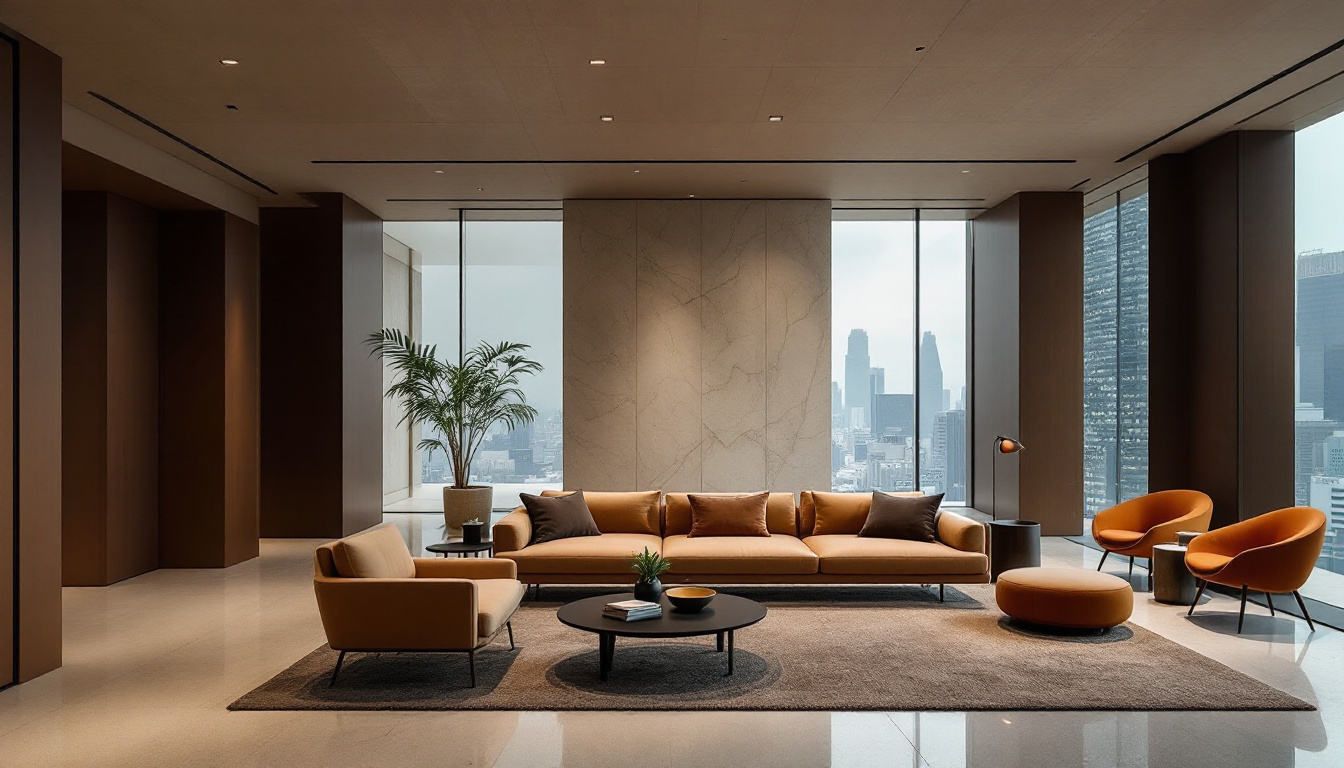
Aman’s standard guestrooms in Tokyo run to roughly 71 square metres. For context, that is larger than the suites at most five-star competitors in the city, and Aman calls it the entry level — a statement of intent about where the property positions itself. The room is organised around a genkan-style entry, a low platform of furniture, and an engawa-like daybed pressed against the floor-to-ceiling glass, so that the act of sitting and looking out over the city becomes the room’s central ritual. Kerry Hill’s interior is an exercise in subtraction: dark timber, stone, and washi screens that diffuse the daylight into something close to candlelit even at midday. The bathroom is a near-cubic volume of dark stone with a deep ofuro tub set against the window, and the city falls away beneath it as you soak.
After three nights, what registered was not any single flourish but the complete absence of error. Nothing was loud. Nothing needed adjusting. There were no superfluous objects, no upselling cards, no clutter — just space, light, and material. The room does not perform luxury; it withdraws from everything that is not essential, which in central Tokyo, at this elevation and this square footage, is its own rare kind of extravagance. On Substance, this is as close to a perfect score as the category permits, and it is earned on discipline rather than display.
Execution
The operation behind the calm is where Aman Tokyo distinguishes itself from properties that merely look serene. Housekeeping is invisible and exact. A breakfast tray ordered for 7:45 arrived at 7:48, complete and at temperature. The lighting transitions through the day on a programme that tracks the sun, so the room never feels artificially lit. Across three days we identified two minor slips — a turndown that arrived later than expected and a mis-set thermostat — which is why Execution lands at 18.5 rather than higher. At this tariff the bar is absolute, and we hold it there.
Service
Service is warm, intelligent, and genuinely unhurried, but it is also where the property’s restraint occasionally costs it. Aman’s house style is to wait to be asked rather than to anticipate, and for guests who value proactivity, the Tokyo team can read as slightly reserved. Requests were met instantly and graciously; we simply noted fewer of the unprompted gestures that define the very top of the category. It is excellent service held one half-step back from extraordinary, and we scored it accordingly.
Setting
The Aman Spa is the property’s most persuasive single argument for the rate. Its centrepiece is a 30-metre swimming pool ringed by a double-height stone volume, with double daybeds spaced generously along its length and the skyline — from Shinjuku across to Mount Fuji on a clear day — laid out beyond the glass. Few urban spas in the world can match the drama of that pool, and across three days it was never crowded; the property’s small key count keeps the wellness floor serene in a way that high-volume city hotels cannot replicate.
Dining is anchored by Arva, the rustic-Italian room whose seasonal “harvest cuisine” is overseen by a Venice-trained kitchen, and by Musashi, an intimate Edomae omakase counter at a hinoki cypress bar where the sushi is among the best in the property’s price band in the city. The Café by Aman sits at the base of the tower in the small Otemachi Forest, and The Lounge serves one of the more inventive seasonal afternoon teas in Tokyo, with the same panoramic outlook. As an urban setting this is close to the ceiling; only the inevitable lack of a true outdoor space — gardens, a terrace, a view of anything but the city itself — keeps Setting a hair below a perfect mark.
The bill, and value
Value is where every Aman pays a tax, and Tokyo is no exception. Our three nights, with breakfast, a spa treatment, and two dinners, settled comfortably into five figures. Against the in-city competition — the Bulgari, the Mandarin Oriental, the Four Seasons at Otemachi — Aman charges a clear premium for square footage and silence. For the traveller who specifically wants those two things, the maths works. For one comparing line items against a peer set that delivers comparable polish for less, it does not. Hence a Value score that is respectable rather than strong, and a property that still lands near the top of our scale on the strength of everything else.
The Premium Standard: 18.5 / 20
Verification
Every factual claim in this review was checked against external sources before publication, on 2026-05-09. Where a figure could not be independently confirmed, it is described in approximate terms in the text. To challenge a fact, write to corrections@premiumtravelreview.com.
Frequently asked questions
- When did Aman Tokyo open?
- It opened in 2014, occupying the top six floors (33 to 38) of the Otemachi Tower in central Tokyo. It was the brand's first urban hotel.
- How many rooms does Aman Tokyo have?
- There are 84 rooms and suites. Even the entry-level accommodation runs to roughly 71 square metres, exceptionally generous for central Tokyo.
- Who designed Aman Tokyo?
- Kerry Hill Architects, the practice responsible for several Aman properties. The interiors translate the proportions of a traditional ryokan into a contemporary tower.
- Is the spa worth it?
- Yes. The Aman Spa anchors on a 30-metre pool with city views toward Mount Fuji on clear days, flanked by thermal facilities. It is among the finest urban hotel spas we have tested.