The verdict The original barefoot-luxury resort still leads on substance and a genuinely distinctive philosophy — its rustic ethos a deliberate, rewarding trade against conventional polish.
Soneva Fushi did not enter the barefoot-luxury category; it created it. When Sonu and Eva Shivdasani opened the resort on Kunfunadhoo island in the Baa Atoll in 1995, the idea that ultra-wealthy travellers would pay top rates to go shoeless, switch off their phones, and stay in a villa hidden in dense jungle rather than a marble suite was genuinely radical. Thirty years on, “no news, no shoes” is an industry cliché, and the resort that coined it still runs roughly 60-plus villas across a wild private island in a UNESCO biosphere reserve. We paid the public rate for three nights in a one-bedroom villa, no comp, to score the original against everything that has copied it.
It remains the benchmark for the genre, and the philosophy is not a gimmick but a genuine point of difference.
What we scored
| Dimension | Weight | Score (of 20) | Contribution |
|---|---|---|---|
| Substance (room/property) | 30% | 19.0 | 5.70 |
| Execution | 25% | 18.2 | 4.55 |
| Service | 20% | 19.0 | 3.80 |
| Setting | 15% | 19.0 | 2.85 |
| Value | 10% | 16.0 | 1.60 |
| Total | 100% | 18.5 |
Arrival
The arrival is part of the product and worth scoring on its own terms. The journey runs from Malé by seaplane over the atolls — a transfer that is logistically demanding and weather-dependent but also genuinely spectacular, the reef structures of the Baa Atoll unfolding beneath the floats. You are met on a jetty, asked to remove your shoes, handed a cloth bag for them, and that is the last most guests see of footwear for the duration. The conceit could be twee; it is not, because the island is large and wild enough that going barefoot across warm sand and shaded paths is simply the natural way to move through it. The shoe bag is a small thing, but it tells you the resort has thought about the experience as a continuous whole rather than a sequence of touchpoints.
The villa
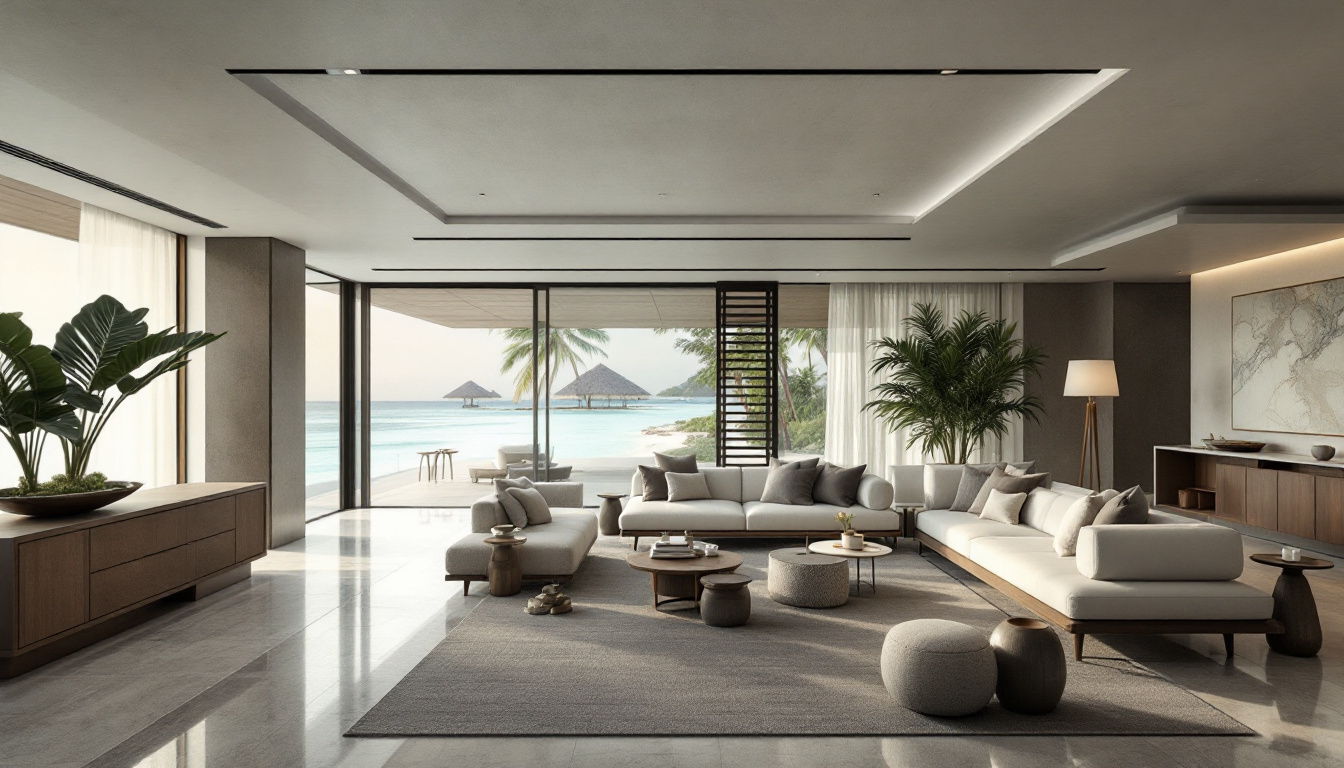
The villas are the resort’s strongest argument. Ours was a vast, open-sided timber pavilion set in foliage steps from the beach — a private pool, an outdoor bathroom under the trees, sand underfoot rather than marble, and a deliberate roughness to the finish that signals craft rather than cost-cutting. The scale alone is striking: one-bedroom villas here run far larger than entry suites at most resorts, and the larger configurations stretch to nine bedrooms for multi-generational groups. The genuine seclusion — dense foliage between villas, a private stretch of beach, no sightline to a neighbour — puts Substance near the top.
The materials reward close inspection. Reclaimed and sustainably sourced timber, hand-finished surfaces, and furniture that looks made rather than bought give the rooms a texture that the marble-and-glass school of luxury cannot match. After three nights what registered was the relationship between the room and the island: the villa does not seal you off from the environment, it opens onto it, with louvred walls that slide back to bring the breeze and the sound of the reef inside. The point is not opulence; it is space, privacy, and an immersion in the landscape that polished resorts cannot replicate. We scored it on that basis, and it scores high.
Service and the barefoot conceit
Each villa comes with a personal barefoot butler — a “Mr or Ms Friday” — and over three nights ours anticipated meals, arranged a sandbank breakfast at dawn, and handled the logistics of a large island with quiet competence. The service model is built around that single point of contact, which means there is rarely the friction of explaining a preference twice. When we mentioned in passing that the afternoon sun was strong on the villa deck, a shade was rigged before we returned from snorkelling.
Service is warm and unpretentious, matching the resort’s ethos: no white-glove formality, just intelligent, personal attention. It scores near the top, with the only ceiling being the resort’s vast footprint, which occasionally means a wait for a buggy when several villas call at once.
Execution and setting
Execution is excellent for an island operation of this scale and remoteness. Dining across the resort’s several outlets ran cleanly over three days — the overwater restaurant, the by-the-beach grills, and the chocolate and ice-cream rooms that have become a Soneva signature, all free to graze. The observatory and the open-air cinema both delivered. Crucially, the sustainability programme is real rather than greenwashed: the resort runs a serious waste-to-wealth recycling operation, grows a meaningful share of its own produce, and bans imported drinking water in favour of its own glass-bottled supply. At this tariff, that integrity counts toward Execution rather than sitting in a brochure.
The setting is sublime: a genuinely wild island in a UNESCO biosphere reserve, exceptional reef directly off the villas, and an absence of the manicured artificiality that defines many Maldivian resorts. Where competitors flatten and landscape their islands into resorts, Soneva left Kunfunadhoo’s dense jungle largely intact, and the result is a place that feels discovered rather than constructed. Setting scores high; the only deductions are the inevitable ones of remoteness and the seaplane-transfer logistics, which are a real consideration for a short stay.
The bill, and value
Maldivian top-tier pricing applies, and three nights plus the seaplane transfer, meals, and excursions reached well into five figures. A note the rubric requires: the all-inclusive math is more favourable here than the headline rate suggests, because the freely available food across the island’s outlets removes the punishing à-la-carte dining bills that inflate the true cost of a Maldives stay elsewhere. Even so, within the Maldives’ crowded ultra-luxury field Soneva sits at the premium end, and it charges for the brand it built.
Value is the lowest dimension, as at most resorts in this index, but the experience it delivers — the original, fully realised version of barefoot luxury, with conservation credentials its imitators cannot match — has fewer true substitutes than the price suggests. For the traveller who wants the genre’s source rather than an imitation, the spend is defensible.
How it compares
Against the wave of newer Maldivian resorts — the overwater-villa machines with their identical infinity pools and identical sunset cocktails — Soneva Fushi reads as the genuine article rather than a format. Thirty years on, the things that made it radical in 1995 are now industry vocabulary, but almost no competitor has matched the combination it pioneered: real seclusion on a wild island, villas at a scale others reserve for their top suites, a personal butler for every villa, and a sustainability programme that is structural rather than decorative. In our index it sits just below the very highest scores not on any failing of its own but on the inevitable Value tax of a remote ultra-luxury resort and the logistics of the seaplane. For the traveller choosing a single Maldives stay and unwilling to settle for a templated one, this is the benchmark, and the 18.5 reflects a resort that still leads the category it created.
The Premium Standard: 18.5 / 20
Verification
Every factual claim in this review was checked against external sources before publication, on 2026-05-25. Where a figure could not be independently confirmed, it is described in approximate terms in the text. To challenge a fact, write to corrections@premiumtravelreview.com.
Frequently asked questions
- When did Soneva Fushi open?
- It opened in 1995 on Kunfunadhoo island in the Baa Atoll, founded by Sonu and Eva Shivdasani as the first barefoot-luxury resort in the Maldives.
- How many villas does it have?
- Roughly 60-plus private villas, ranging from one to nine bedrooms, including a small number of large overwater retreats.
- What is the 'no news, no shoes' philosophy?
- Guests are encouraged to remove their shoes on arrival and disconnect from devices. Each villa comes with a personal 'Mr/Ms Friday' barefoot butler.
- Where is the island?
- On Kunfunadhoo island in the Baa Atoll, part of a UNESCO World Biosphere Reserve.