The verdict A benchmark of British grand-hotel service and dining, scored at the very top on execution and setting — held a notch below the leaders by rooms that are excellent rather than singular.
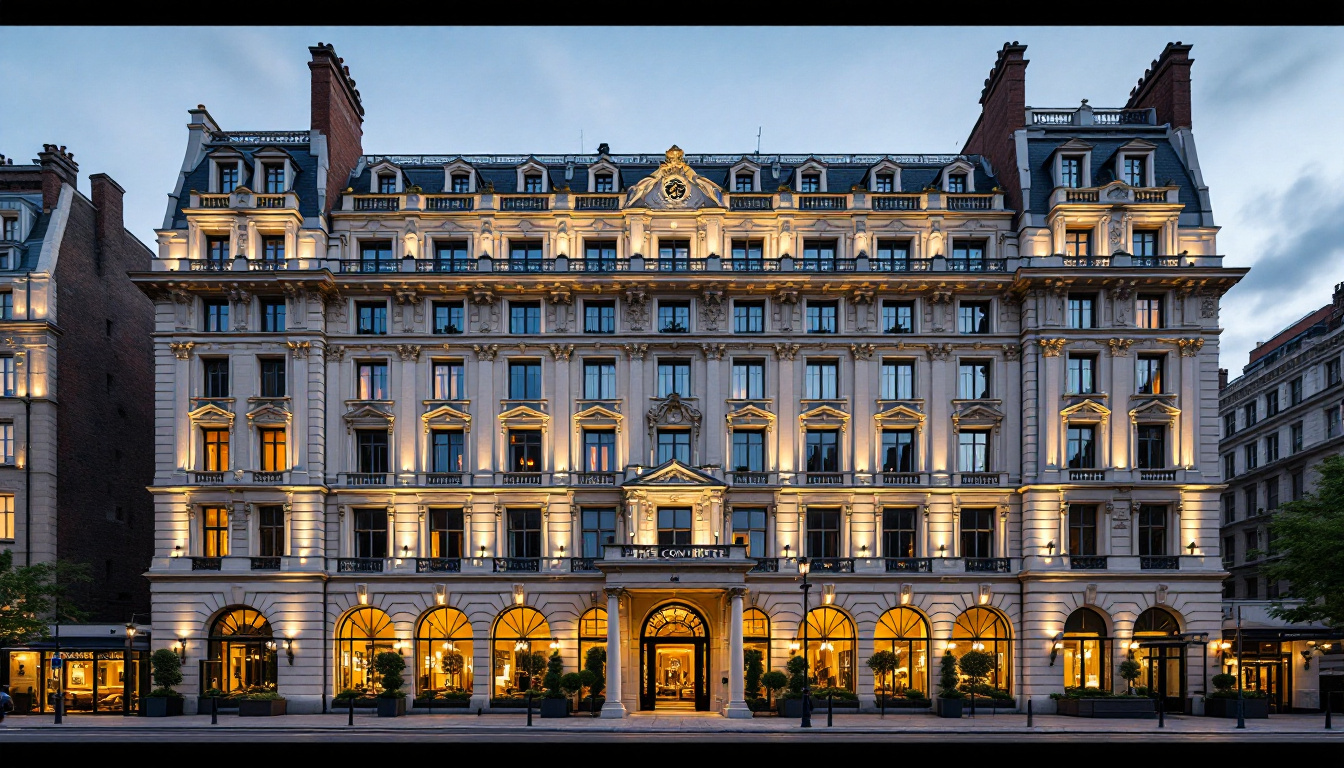
Some hotels invent the standard; The Connaught maintains it. This Mayfair institution traces its lineage to 1815, took its current name during the First World War, and was brought into the modern era by a £70 million restoration that reopened the property in December 2007. Today it is 121 rooms of British grand-hotel hospitality, anchored by a three-Michelin-starred Hélène Darroze and the David Collins-designed Connaught Bar, twice crowned the world’s best. We paid the public rate for three nights in an entry-category room to test whether the institution still earns its standing under a rubric rather than a reputation.
It does, comfortably — and on service and dining, it sets the bar the rest of the field is measured against. The question worth asking of any institution this storied is whether reputation has outrun reality, whether the name now does the work the operation once did. At the Connaught, three nights confirmed the opposite: the standing is earned daily, in the small operational details that the rubric is designed to catch, rather than coasted on.
What we scored
| Dimension | Weight | Score (of 20) | Contribution |
|---|---|---|---|
| Substance (room/property) | 30% | 17.5 | 5.25 |
| Execution | 25% | 18.3 | 4.58 |
| Service | 20% | 19.0 | 3.80 |
| Setting | 15% | 18.5 | 2.78 |
| Value | 10% | 15.9 | 1.59 |
| Total | 100% | 18.0 |
The room
The guestrooms, dressed by Guy Oliver in the £70 million restoration that reopened the hotel in December 2007, are classic Mayfair: rich panelling where the architecture calls for it, restrained colour, antique-quality furniture, marble bathrooms of real depth. Our entry-category room, one of the 121 across six floors, was beautifully kept — the kind of space that has clearly been refreshed continuously rather than allowed to age between renovations. The 1897 mahogany staircase at the building’s heart, retained through every restoration, sets the register for the whole property: this is a hotel that prizes continuity over reinvention.
What keeps Substance in the high teens rather than the very top is that the rooms, for all their quality, sit within a known idiom. They are an exemplary version of the British grand-hotel room rather than a singular design statement — and at this tariff, in a field that now includes properties built around one architect’s complete and uncompromising vision, that distinction costs a point. This is excellence within a tradition, not a reinvention of it, and the rubric scores it as such without apology.
Execution and service
This is where The Connaught is genuinely class-leading, and where it earns its place among the leaders of our index. Over three nights the operation was close to seamless: a pressing request returned early, a restaurant reservation across town arranged in minutes without our having to chase it, breakfast that arrived precisely as ordered and at temperature. The staff-to-guest ratio is felt rather than announced, and the team carries the unforced confidence of people who have done this at the highest level for a very long time — there is no anxiety in the service, no sense of effort, just quiet competence.
Service earns one of the top marks on our scale. Execution sits just a half-step behind it, and only because we noted a single slow evening at reception during a busy Friday check-in window — the kind of minor friction that a 121-room hotel at full occupancy occasionally produces, but which the rubric is obliged to record.
Setting
Few hotels can match The Connaught’s setting on the strength of its own building and its outlets. Hélène Darroze at The Connaught holds three Michelin stars and remains one of London’s serious dining destinations, having taken over from Angela Hartnett in 2008 and climbed to the top of the guide since. Jean-Georges at The Connaught handles the all-day register with real polish. The Aman Spa is a genuine, full-service facility — a proper pool and treatment complex, not the token gym that passes for wellness at lesser grand hotels.
And the Connaught Bar, designed by the late David Collins and opened in 2008, is a destination in its own right: silver-leaf walls, the famous martini trolley wheeled to the table, and a list that earned it the title of World’s Best Bar twice — the only bar ever to do so. In our experience, a martini mixed at the table from the trolley remains deserving of every word of the reputation. The Mayfair location, steps from the galleries, the auction houses, and the shops of the district, completes the picture and makes the hotel a genuine base for the city rather than merely a place to sleep in it. Setting scores near the top.
The bill, and value
Mayfair grand-hotel rates apply, and three nights with dinner at Darroze and a spa treatment landed firmly in the upper bracket of London hospitality. Against its direct peers — Claridge’s and The Berkeley in the same Maybourne stable, plus The Savoy and the Ritz — the Connaught is priced at the very top of the group, and it broadly earns the position on the strength of its service and its dining roster.
Value is the lowest dimension, as expected at this tier and in this city, but the spend buys a level of operational consistency and a set of outlets — a three-star restaurant, the world’s most-decorated bar, a real spa — that few hotels anywhere can match under one roof. For the traveller who wants the definitive London grand-hotel experience, the Connaught remains the reference point against which the others are measured, and the headline score reflects that standing.
How it compares
The Connaught is the British counterpart to the Mandarin Oriental Bangkok in our index: a property that wins on the people and the outlets rather than on the cutting edge of room design. The two share a profile — class-leading service, a celebrated dining roster, rooms that are excellent within a tradition rather than revolutionary — and they share the same honest ceiling, which is that a heritage grand hotel cannot post the room scores of a Cheval Blanc or an Aman without ceasing to be itself. Against its direct London rivals, the Connaught’s edge is the completeness of its offer under one roof: a three-Michelin-starred restaurant, the world’s most-decorated bar, and a genuine spa, a combination none of its peers quite matches. The 18.0 reflects a hotel operating at the very top of the British grand-hotel tradition, held just short of the index leaders by the single dimension — room originality — where tradition and the contemporary cutting edge inevitably diverge.
The Premium Standard: 18.0 / 20
Verification
Every factual claim in this review was checked against external sources before publication, on 2026-05-19. Where a figure could not be independently confirmed, it is described in approximate terms in the text. To challenge a fact, write to corrections@premiumtravelreview.com.
Frequently asked questions
- When did The Connaught last reopen?
- After a £70 million restoration led by Guy Oliver and the late David Collins, it reopened in December 2007. The building's history runs back to 1815.
- How many rooms does The Connaught have?
- There are 121 individually designed rooms and suites across six floors. The property is part of Maybourne.
- What is the signature restaurant?
- Hélène Darroze at The Connaught holds three Michelin stars. The hotel also has Jean-Georges at The Connaught.
- Why is the Connaught Bar famous?
- Designed by David Collins and opened in 2008, it has twice been named the World's Best Bar — the only bar to achieve the title twice.