The verdict A serene island counterpoint to crowded Venice, scored highest on setting and execution — its lagoon seclusion the very thing that defines, and slightly limits, the experience.
Venice can be exhausting; the Cipriani is the antidote. Giuseppe Cipriani — the man behind Harry’s Bar and the Bellini — opened the hotel in 1958 on the island of Giudecca, a short private launch across the water from St Mark’s, precisely so that guests could have the city and an escape from it in the same stay. Today it runs around 67 rooms, the only Olympic-inspired saltwater pool in Venice, and a Michelin-starred Oro. We paid the public rate for three nights in an entry-category room, taking the hotel’s launch to and from San Marco, no comp, to score the lagoon retreat against our rubric.
It scores high on the strength of its setting and its operation, with the very seclusion that defines it also setting a quiet ceiling on the experience.
What we scored
| Dimension | Weight | Score (of 20) | Contribution |
|---|---|---|---|
| Substance (room/property) | 30% | 17.5 | 5.25 |
| Execution | 25% | 18.5 | 4.63 |
| Service | 20% | 18.5 | 3.70 |
| Setting | 15% | 19.0 | 2.85 |
| Value | 10% | 15.7 | 1.57 |
| Total | 100% | 18.0 |
The property
The Cipriani occupies the eastern tip of Giudecca, the long island that faces the main body of Venice across the Giudecca Canal. The setting was chosen with intent: Giuseppe Cipriani wanted his guests to have the city on their doorstep and an escape from its crowds at the same time, and the geography delivers exactly that. The property is more horizontal and garden-bound than the vertical palazzo hotels of the San Marco side — three hectares of grounds, lawns, the Casanova Gardens, and the famous pool, a footprint that simply does not exist anywhere else in central Venice. The connection to Harry’s Bar and the invention of the Bellini gives the place a particular Venetian pedigree, and the rebrand to Belmond in 2014 brought the operational backing of a serious luxury group without erasing the house’s character.
The room
Our entry-category room was classic Venetian: Fortuny-style fabrics, Murano glass, warm colour, generous proportions, an immaculate marble bathroom. It was beautifully kept and quietly luxurious, with a garden outlook that traded the lagoon drama of the pricier categories for calm. The signature suites in the historic Palazzo Vendramin — a separate building with butler service and the grandest lagoon views — are a different and more theatrical experience, but the standard rooms are excellent of their kind, with the kind of quiet quality that comes from continuous refurbishment rather than a single renovation.
What holds Substance in the high teens is that the rooms work within a traditional Venetian idiom rather than making a contemporary design statement. There is no architect’s manifesto here, no single vision imposed on the property; instead there is the accumulated good taste of a hotel that has known its clientele for decades. That is exactly the trade the house intends, and we score it accordingly.
Setting
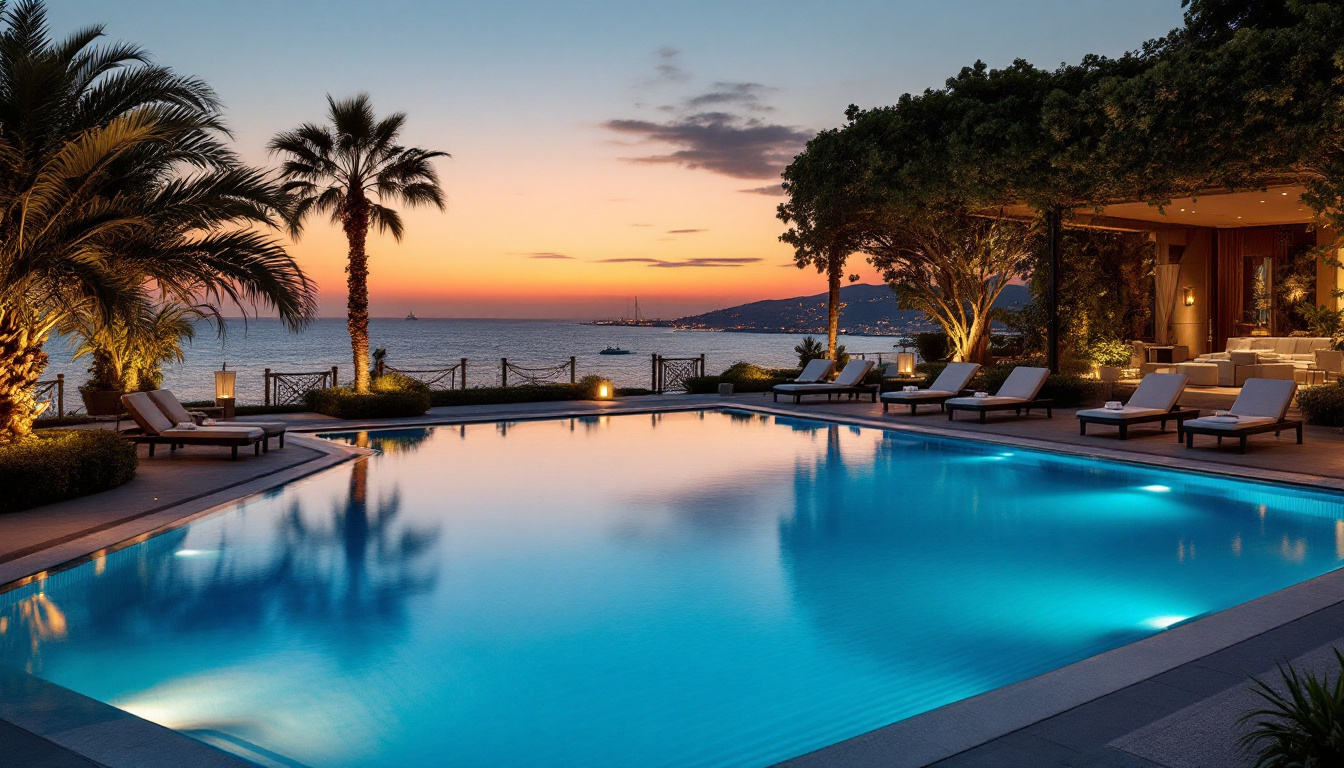
The setting is the property’s defining asset and its highest-scoring dimension. The Giudecca position grants something almost no other Venice hotel can: silence, space, gardens, and that singular Olympic-inspired heated saltwater pool — the only pool of its kind in the city — with St Mark’s a five-minute private launch away across the lagoon. Breakfast on the terrace, with the campanile and the domes of San Marco shimmering across the water, is the kind of setting that justifies the whole proposition on its own.
Dining is anchored by Oro, the room designed by Adam Tihany that opened in 2014 and earned a Michelin star in 2015, with serious cooking and a view to match. The garden restaurant and the poolside service handle the daytime register with ease. Setting scores near the top — the seclusion is the point, and it is sublime.
Execution and service
The operation runs with the polish of a property that has hosted the discerning for decades. Over three nights the private launch — the small fleet of boats that shuttle guests to and from San Marco on demand — ran reliably and on time, which matters enormously to the experience, since the boat is the hotel’s umbilical cord to the city. Dining across the outlets was handled smoothly, and housekeeping was exact. Service is warm and genuinely Italian — personal, unhurried, attentive without formality, the kind of hospitality that remembers your name by the second morning.
Both dimensions score in the high teens, with the only minor friction being the inherent logistics of an island stay: every trip into Venice is mediated by the boat, which is romantic but, when you have a fixed dinner reservation across the water, occasionally a source of mild anxiety.
The bill, and value
Venice peak-season rates apply, and three nights with a dinner at Oro and pool access reached well into five figures. Value is the lowest dimension, partly because the island location, for all its romance, means you pay for seclusion and then pay again in time on the water for every foray into the city — a genuine consideration for a short stay where every hour counts. The honest counterpoint is that on the San Marco side you pay comparable rates for noise, crowds, and no garden.
For the traveller who wants Venice without the crush, and treats the lagoon crossing as part of the pleasure rather than a tax, the Cipriani is the city’s most serene grand-hotel option, and the rubric places it firmly among the leaders.
How it compares
The Cipriani’s closest peers in our index are the other great Italian properties — the Cliffside drama of Il San Pietro, the Baroque intimacy of Passalacqua — and against them it offers something neither can: a genuine garden-and-pool resort experience inside one of the most crowded cities on earth. It scores below Passalacqua on the sheer originality of the rooms and below the Riviera and Amalfi properties on the raw spectacle of the setting, but it answers a question none of them do, which is how to have Venice and an escape from Venice at once. The trade-off is the boat: every excursion is mediated by the lagoon crossing, which is romance and friction in equal measure. For a longer, slower stay the friction fades and the seclusion becomes pure asset; for a frantic two-night dash it can frustrate. The 18.0 reflects a property that is close to ideal for the right trip and merely very good for the wrong one — a distinction the rubric is careful to draw.
The Premium Standard: 18.0 / 20
Verification
Every factual claim in this review was checked against external sources before publication, on 2026-04-27. Where a figure could not be independently confirmed, it is described in approximate terms in the text. To challenge a fact, write to corrections@premiumtravelreview.com.
Frequently asked questions
- When did the Hotel Cipriani open?
- It opened in 1958, founded by Giuseppe Cipriani of Harry's Bar and Bellini fame, on the island of Giudecca.
- How many rooms does it have?
- Around 67 rooms and suites, including signature suites in the historic Palazzo Vendramin, many with lagoon or garden views.
- What is the famous pool?
- An Olympic-inspired heated saltwater pool set in the gardens — the only pool of its kind in Venice.
- Tell me about the dining.
- Oro, designed by Adam Tihany and opened in 2014, was awarded a Michelin star in 2015. The hotel became Belmond Hotel Cipriani in the 2014 rebrand.